
Blog
Voltage Stabilizer for Medical Equipment

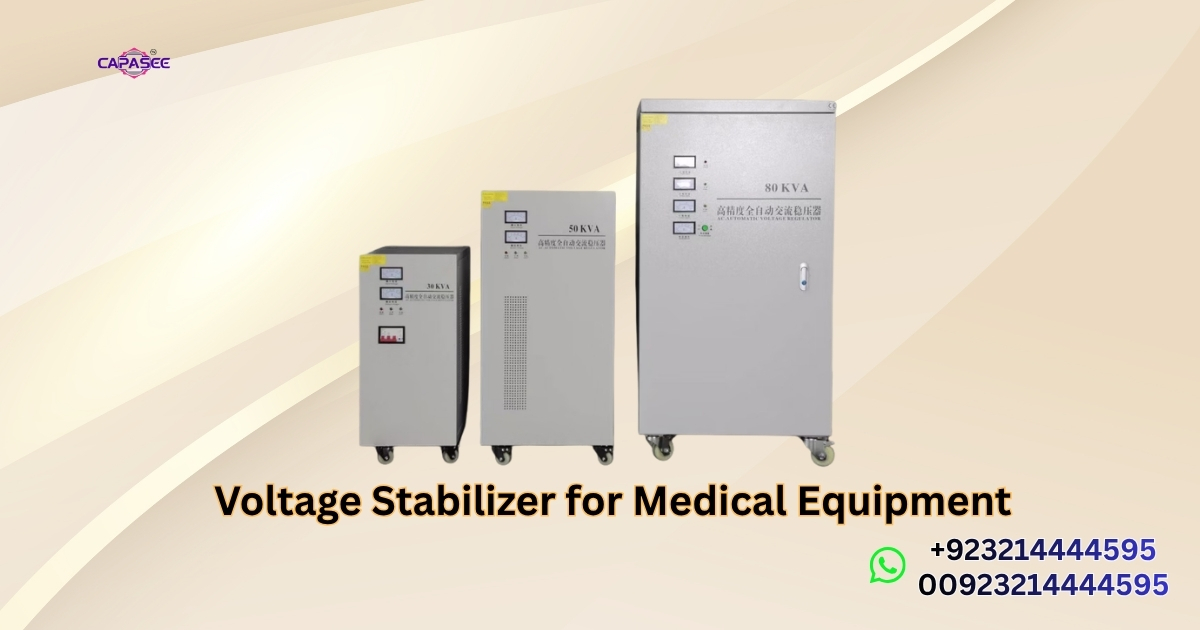
An MRI machine, which costs millions of rupees, can be ruined by a single momentary power loss of less than a second. Medical facilities in Pakistan, much like other essential services, are under a concealed but grave danger due to voltage instability, a common occurrence in the country, ranging from load shedding in Karachi’s industries to the frequent fluctuations in electrical power supply in Lahore. Having a voltage stabilizer for medical equipment is no extra frill; it is the first line of defence between your diagnostic equipment and irreversible electrical damage.
If you’re running a private clinic, hospital biomedical department or diagnostic lab, it’s important to know how a proper stabilizer safeguards your investment, as well as your patient. In this guide, Capasee Electro Medical Engineering guides you through all of the above. How these devices work, what the specifications mean and how to choose the best voltage stabilizer for medical equipment for your facility.
Why Medical Equipment Needs a Voltage Stabilizer in Pakistan
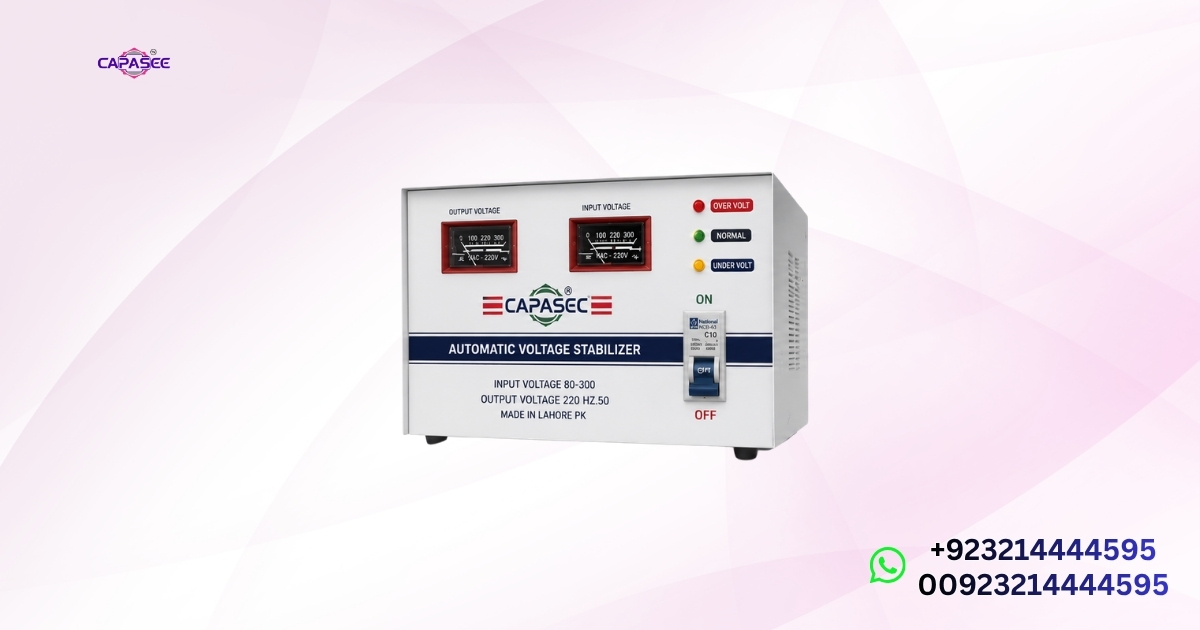
One of the greatest dangers to medical infrastructure in Pakistan is the unstable electricity, and most of the facility managers do not take it seriously till the machines go down. In the medical field, a voltage stabilizer for medical equipment is a device that should protect sensitive equipment from fluctuations in voltage levels, delivering clean and controlled power to the devices at all times. Even a minor voltage spike can wreak havoc in precision electronics worth several millions of rupees.
It is not a new phenomenon that Pakistan’s power grid has been inconsistent. Whether a big hospital in Lahore or in Karachi or any other smaller clinic in the district, every healthcare institution is facing the problem of power quality at least once a week, if not more. Capasee Electro Medical Engineering has been active in these facilities on hundreds of occasions and has always found that unregulated power is a common cause of premature equipment failure, despite the need for a voltage stabilizer for medical equipment.
Common Voltage Fluctuations in Pakistani Hospitals
Pakistani hospitals are at risk of three situations regarding electricity; voltage sag, voltage swell and power outages. Voltage sags are a result of sudden high demand for power as large appliances such as HVACs or industrial equipment are operated, which pulls the voltage down for a brief period. Swells are when the voltage spikes drastically as soon as the power comes back on the grid during the load shedding phase of the recovery period. A voltage stabilizer for medical equipment helps manage these fluctuations.
A biomedical engineer from Faisalabad reports that diagnostic equipment is most likely to malfunction during early morning hours when the grid switches from supply zones in cities like Faisalabad and Peshawar. These are not explosions with sparks flying in the open. They are low key damage that impacts equipment life for months and results in equipment failure when a voltage stabilizer for medical equipment is not in place.
You May Also Read This Blog: How to Choose the Right UPS for Laboratory Equipment
Risks of Unstable Voltage to Sensitive Medical Devices
Unstable power isn’t just about a blown fuse. Motherboard deterioration in CT scanners, lab analyzer calibration data corruption and transformer burnouts in X-ray machines are all caused by erratic voltage. Some manufacturers, such as those making imaging systems, explicitly state in their manuals that they will not be held responsible for operating them outside of a certain voltage range. This is why a voltage stabilizer for medical equipment is essential.
A digital X-ray machine was installed at a public hospital in Rawalpindi, and then the digital X-ray machine failed within 18 months. The biomedical team, on a thorough investigation, discovered clear indications of multiple voltage stresses on the internal power supply boards. There was no voltage stabilizer for medical equipment installed in the hospital. One mistake ended up costing more than PKR 2.8 million in repairs and replacements.
How to Choose the Right Voltage Stabilizer for Medical Equipment
It’s not simply a matter of wattage match. The correct unit should be able to match the sensitivity of the device being protected, the quality of the power supply in the facility and the critical nature of the application. The mistake in this decision would be spending money on equipment that either under protects your machines or wastes valuable time in your power supply chain when selecting a voltage stabilizer for medical equipment.
The first step is to review your equipment list. An infusion pump or patient monitor is not as demanding on voltage regulation as an MRI machine or CT scanner or a digital radiography system. Capasee Electro Medical Engineering also provides custom assessments for hospitals and clinics, ensuring that the biomedical team is able to select the appropriate voltage stabilizer for medical equipment specifications for each piece of equipment before it’s purchased.
Key Features: Accuracy, Response Time and No Mechanical Parts
For medical applications, three technical specifications are more important than any other in choosing a stabilizer; output accuracy, response speed, and being free from moving parts. The output accuracy is the degree of closeness in maintaining the output voltage to the set value. If you are using a diagnostic device that is very precise, it requires a higher degree of accuracy, plus or minus 0.5%. A voltage stabilizer for medical equipment should meet these requirements.
The faster the stabilizer can respond to incoming changes, the quicker the response time. General appliances can have a 100 milliseconds or more delay; however, medical imaging equipment must be responsive enough to correct the delay within 20 milliseconds to prevent image artefacts and processing errors. Without any mechanical elements, units like static or solid state stabilizers provide this speed without also being burdened by the maintenance hassle of older servo based designs, making them an ideal voltage stabilizer for medical equipment.
Comparison: Servo vs. Static Voltage Stabilizers for Hospitals
Hospital procurement and biomedical engineers should know the fundamental difference between the two types of stabilizers before investing, servo versus static. While both are good for equipment protection, they act completely differently in real life conditions in Pakistani healthcare facilities, and each can serve as a voltage stabilizer for medical equipment depending on the application.
| Feature | Servo Stabilizer | Static (SR) Stabilizer |
| Response Time | 50 to 100 ms | Less than 20 ms |
| Output Accuracy | Plus or minus 1 to 2% | Plus or minus 0.5% |
| Mechanical Parts | Yes (carbon brush motor) | No (contactless) |
| Maintenance Requirement | Regular servicing needed | Maintenance free |
| Best For | General medical equipment | High precision devices such as CT, MRI |
Although they cost more, static stabilizers are the better choice for long term investment for most hospitals in Pakistan. The elimination of carbon brushes alone eliminates a recurring maintenance cost, which can accumulate to a considerable amount over a 5 to 10 year life when using a voltage stabilizer for medical equipment.
Check More & Purchase: Our Products
Top Benefits of Using Capasee Voltage Stabilizers for Medical Equipment
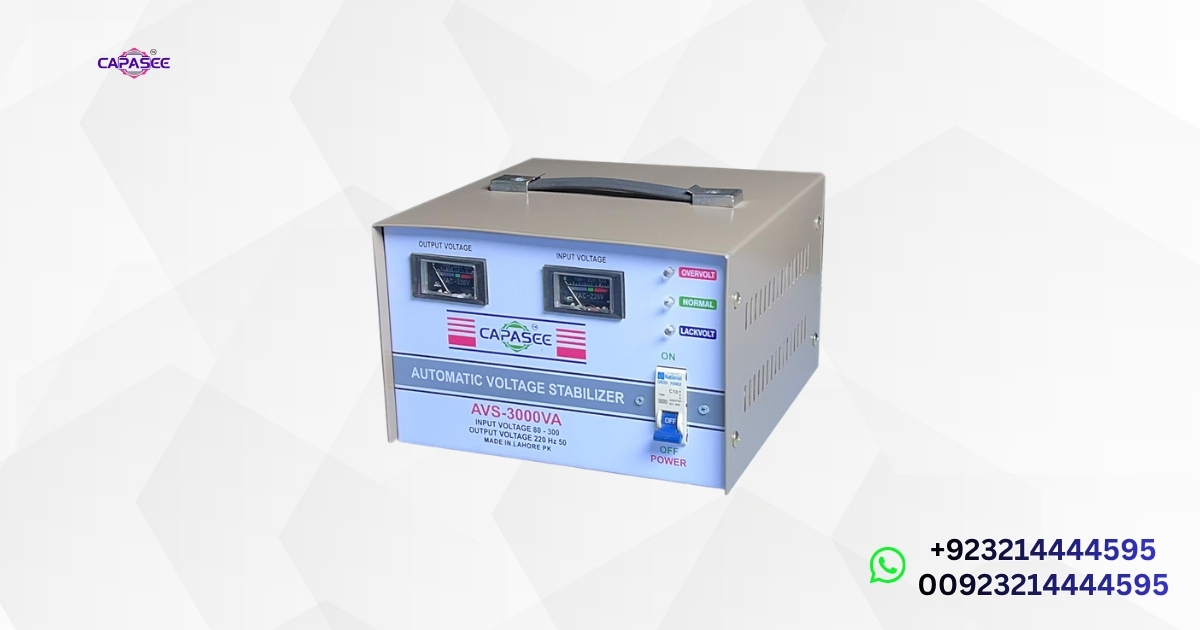
Capasee Electro Medical Engineering develops its stabilizers to match the power sensitivity of diagnostic and therapeutic devices, so that each stabilizer is designed specifically for the healthcare sector as a voltage stabilizer for medical equipment. The available general purpose stabilizers are for industrial or domestic applications. Medical equipment requires a higher standard, and Capasee offers that with its purpose built design, local technical support, and proven performance in Pakistani hospitals and clinics.
The advantage of having a particular provider is not only the product itself but also the assistance they provide. It is the skill of installation, calibration, and after sales support. If a power event happens in a hospital’s Intensive Care Unit at 2 AM, then you need a team that has both the electrical and medical equipment side of the problem under their belt, especially when maintaining a voltage stabilizer for medical equipment.
Protecting High Cost Devices: MRI, CT, X-Ray and Lab Analyzers
The highest capital investment that is made by a medical facility would be that of MRI machines, CT scanners, digital X-ray machines, and automatic lab analyzers. These devices feature sensitive power supply boards, precision sensors, and complex software systems that are not tolerant of any deviation from the supply voltage, even for a brief period of time. Capasee stabilizers offer the clean, regulated power that these machines need to run in their designed parameters as a reliable voltage stabilizer for medical equipment.
During the installation of a new 1.5T MRI machine at a private diagnostic centre in Lahore, the static stabilizer, Capasee, was installed. The centre experienced no voltage related service calls for two years of operation on that machine. Their adjacent facility had used the same model of MRI but had not prepared it properly and had replaced the motherboard three times during the same time frame. The price disparity is self evident.
Ensuring Continuous Patient Care During Power Fluctuations
Loss of voltage during the procedure will have consequences other than financial. A CT scan that experiences a power loss will require re imaging the patient, thus increasing patient radiation exposure and delays. If a voltage surge resets an infusion pump, it will affect the medication administration. Stable power directly relates to patient safety, not equipment longevity. This is why a voltage stabilizer for medical equipment is essential in critical care environments.
Capasee stabilizers are specifically built to regenerate the output voltage without any transfer time in the event of a regulation. In places such as ICUs, operating rooms, and radiology rooms, this smooth operation is a must have. It is the minimum requirement for every voltage protection solution in a hospital in Pakistan.
Frequently Asked Questions
How to choose a voltage stabilizer?
Select a stabilizer with a matching KVA rating to the equipment’s power load and measure output accuracy and response time. Static stabilizers with 0.5% accuracy are recommended for medical equipment. Capasee Electro Medical Engineering guides health care establishments in Pakistan to choose the right unit for each application.
What is a 0.5 kVA stabilizer used for?
Small equipment that consumes up to 500 watts (e.g., patient monitors, small laboratory equipment, or diagnostic meters) uses a 0.5 kVA stabilizer. It cannot be used for heavy medical equipment such as X-ray or imaging machines, where a much greater KVA is needed to ensure safe operation.
What is a VG 400 stabilizer used for?
For general purpose voltage regulation of light domestic or commercial loads, a VG 400 stabilizer is used. Not suitable for precision medical equipment. For hospitals and clinics in Pakistan, medically rated static stabilizers with quicker correction speed and more precise voltage control than standard VG series stabilizers should be used.
How much is a 5000 watt stabilizer?
The price of a 5000 watt stabilizer in Pakistan ranges from PKR 25,000 to PKR 80,000, according to the type and specification of the 5000 watt stabilizer. Medical grade static models are located at the top end because of the precision components. Capasee Electro Medical Engineering sells competitively priced units, complete with installation and after sales service across the country.
Is there a 10,000 watt stabilizer?
Yes, 10,000 watt stabilizers are commonly found and utilized for large medical machines such as CT scanners, X-ray machines, and large analyzers in laboratories. Capasee Electro Medical Engineering provides high capacity static & servo stabilizers in this class of stabilizers, which are designed specifically for the hospital & diagnostic centre applications in Pakistan.
What is the price of 7000 volt stabilizer in Pakistan?
The price of a 7 kVA stabilizer in Pakistan varies from PKR 35,000 to PKR 120,000, depending on the type of technology it has and the degree of accuracy it offers. Medical grade static units are more expensive but offer better long term protection for sensitive diagnostic equipment. Check for the current price and stock in your area with Capasee Electro Medical Engineering.
Summary
It is essential to take measures to protect your medical equipment from the unstable power supply situation in Pakistan, and you cannot afford to put it off or skimp on it. When the voltage stabilizer for medical equipment is installed and chosen correctly, it protects your critical machines, prevents disruptions in patient care, and saves your facility from expensive repairs later in the year. In a healthcare facility, this is where fast response times and tight accuracy ratings all but dictate the selection of static stabilizers.
If you operate any hospital, clinic, or diagnostic centre in Pakistan, then now is the time to review your existing power protection solution. Contact Capasee Electro Medical Engineering for a professional consultation personalised to your facility. You’ve got equipment that’s worth safeguarding in a proper manner, and your patient deserves no less.