
Blog
Stabilizer for Medical Equipment

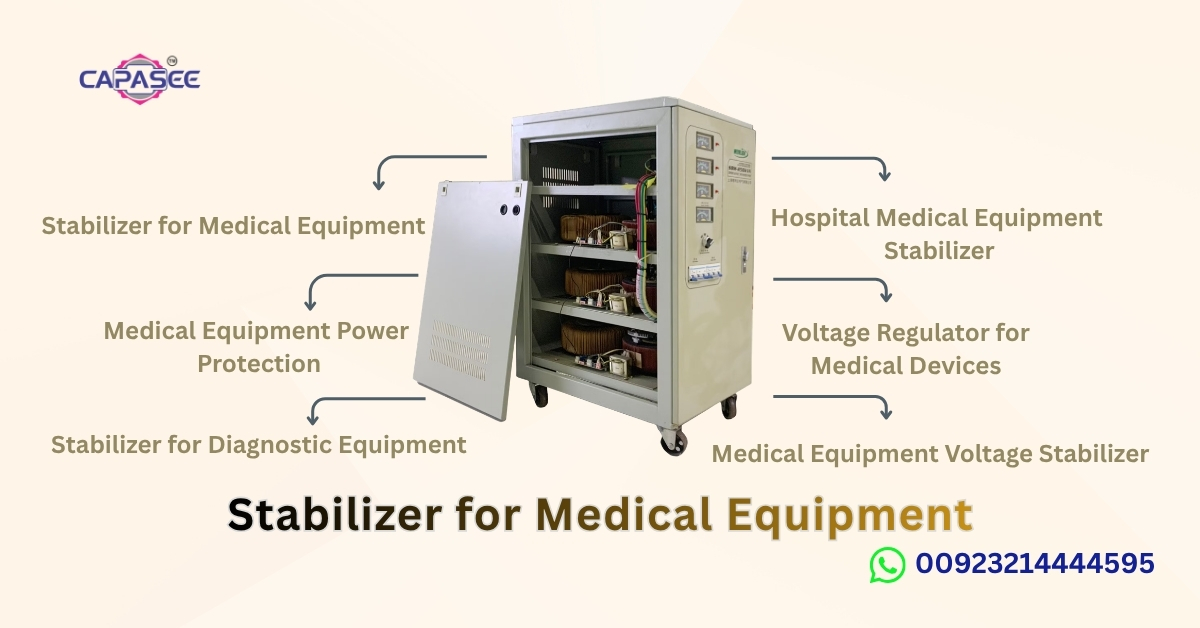
One voltage spike can ruin an MRI scanner, a ventilator, or a surgical monitor, expensive and life saving equipment that costs millions. But in hospitals, clinics, and diagnostic laboratories across Pakistan, many medical devices are being operated without voltage protection. Unstable power supply, frequent load shedding, and voltage spikes are highly likely and potentially devastating.
A stabilizer for medical equipment is not a nice to have; it’s a must have to protect your equipment and your patients. Here, you will discover what a medical grade stabilizer actually does, why the stabilizers used at home can’t be trusted for medical devices, what to look for, and how Capasee Electro Medical Engineering helps hospitals, clinics, and diagnostic centres in Pakistan select and install the right stabilizer for medical equipment for each device. Cross Pakistan, choose and install the right protection for every type of device.
Why Medical Equipment Needs a Stabilizer in Pakistan
One of the biggest risks to medical equipment in Pakistan is voltage instability. You may own a private clinic in Lahore, operate a diagnostic centre in Karachi, or work for a government hospital in Multan, but you share a common threat to your equipment; the undulating supply voltage that erodes the sensitive components over time, or completely fails them in a spike. The best way to safeguard that investment is through a medical equipment stabilizer or a reliable stabilizer for medical equipment.
The national electricity supply system in Pakistan has poor voltage regulation in most major and smaller cities. Regular load shedding, overloading of the transformers, and worn out distribution systems mean that the voltage can drop well below or rise above the safe operating limits of imported medical equipment. These devices are designed to operate on a steady 220V supply, not the 160V-260V fluctuations that occur in Pakistani cities.
Voltage Fluctuations Impacting Healthcare Devices
Health care devices are designed with sensitive components that don’t take kindly to electrical shocks. A voltage fluctuation may cause an ultrasound to produce distorted images and then destroy its circuitry. A ventilator device on low voltage may not operate at its capacity when a patient needs it to.
For instance, the failure of two imported ECG machines in a diagnostic centre in Faisalabad was reported in a single year. An inquiry revealed that the fault was due to low voltage during the evening peak period. It was solved by adding medical grade stabilizers or a stabilizer for medical equipment to both machines. This is a monthly tale in Pakistan’s health care industry.
You May Also Read This Blog: Which Stabilizer is Best for Home Use
How Stabilizers Prevent Costly Downtime for Hospitals
Hospital equipment downtime is not only costly but also a potential health risk. If a CT scanner needs repair, delays in patient diagnoses can occur for days or weeks, depending on the availability of parts and the time required for import.
A stabilizer for medical equipment helps keep output voltage constant despite input variations, for safe and continuous operation. This, in turn, means fewer breakdowns, longer equipment life, and uninterrupted hospital operations. This means cost savings and greater patient confidence for hospital administrators in Pakistan using a stabilizer for medical equipment.
Key Features of Top Stabilizers for Medical Equipment
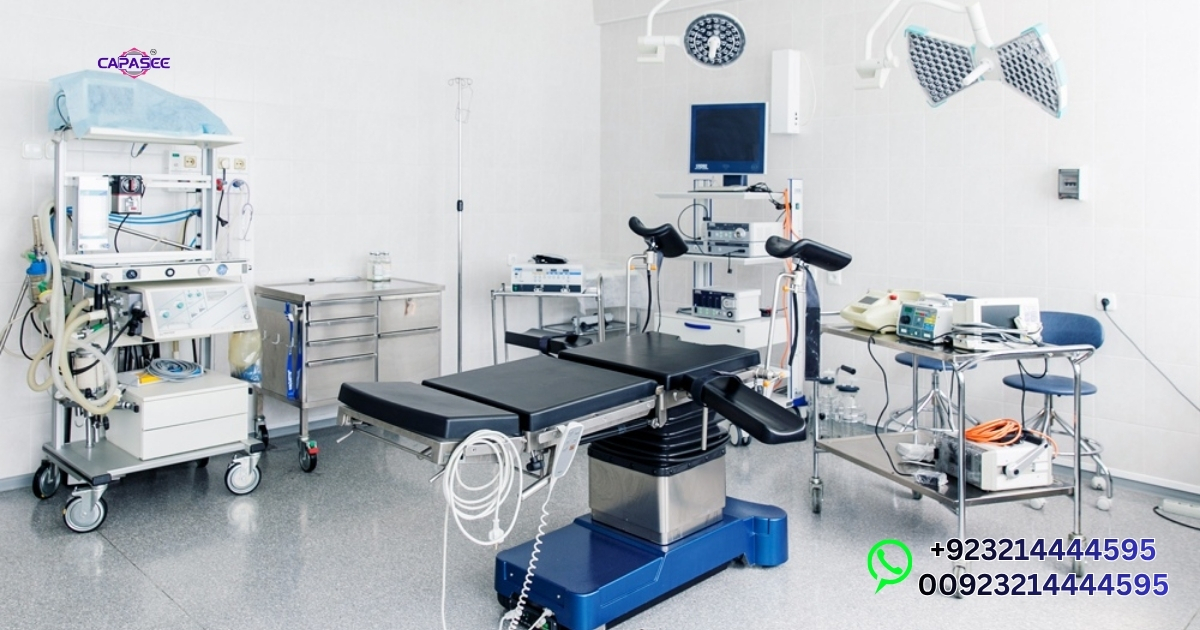
Not all stabilisers are created equal for medical use. The most suitable stabilizers have a narrow tolerance, rapid response, surge protection, and low noise levels, and are constructed in a way that does not interfere with the sensitive electromagnetic (EM) field of hospital environments.
An average stabilizer used with an air conditioner has an output tolerance of ±10%, which is too much for devices such as an infusion pump, digital X-ray unit, or operating theatre lights. Stabilizers used in medical applications hold the output to a tolerance of ±1% to ±3%, the tolerance required by these devices to operate safely and reliably, especially when using a stabilizer for medical equipment.
Precision Voltage Regulation for Sensitive Devices
High precision regulation means the stabilizer compensates for changes in input in milliseconds and adjusts the output before any connected device experiences a change. This is particularly important for imaging devices such as MRI and digital radiography that can lose image quality if the environment is even briefly affected by a voltage change.
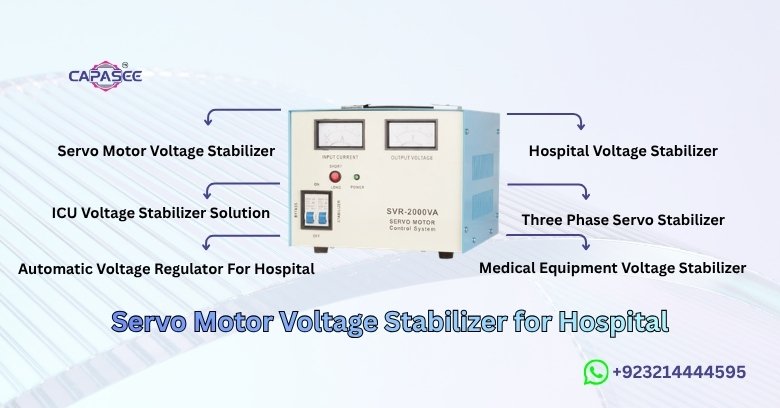
Today’s servo motor and static voltage stabilizers both offer high regulation accuracy, but static stabilizers respond more quickly and are therefore ideal for critical care settings. When purchasing a stabilizer for medical equipment, be sure to check the regulation accuracy specification in the datasheet.
Capasee Electro Medical Engineering Reliable Solutions
Capasee Electro Medical Engineering offers stabilizers that are designed and manufactured for the voltage variations present in Pakistan’s medical institutions. Testing is conducted according to local grid characteristics (not global lab standards), so you can be sure the real world performance matches the product’s specifications.
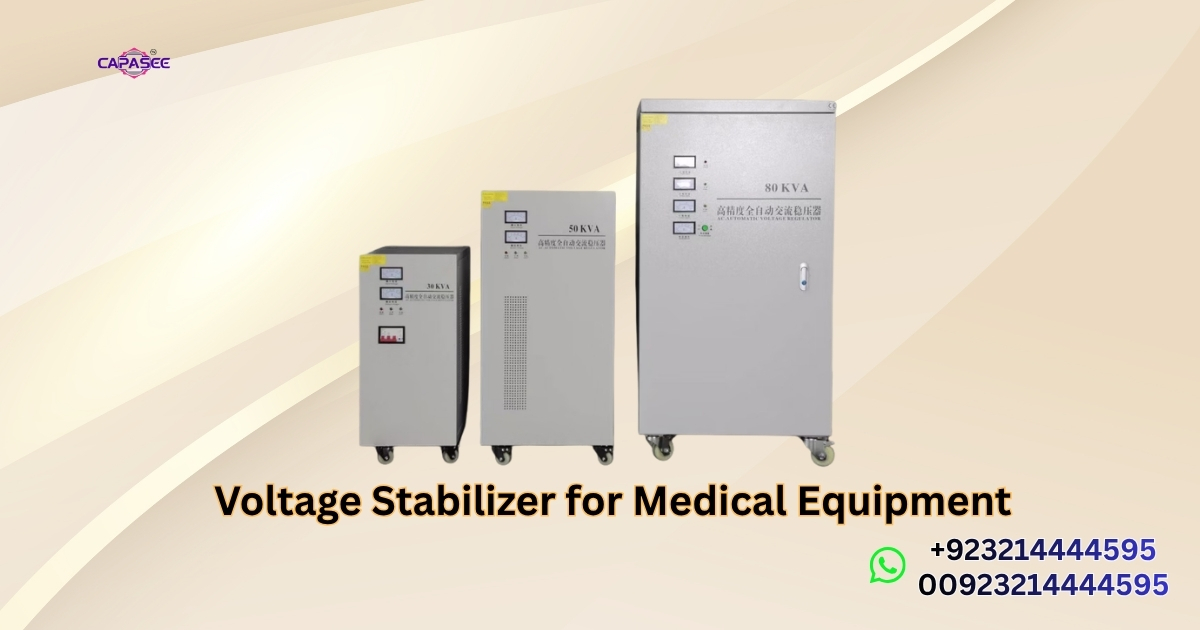
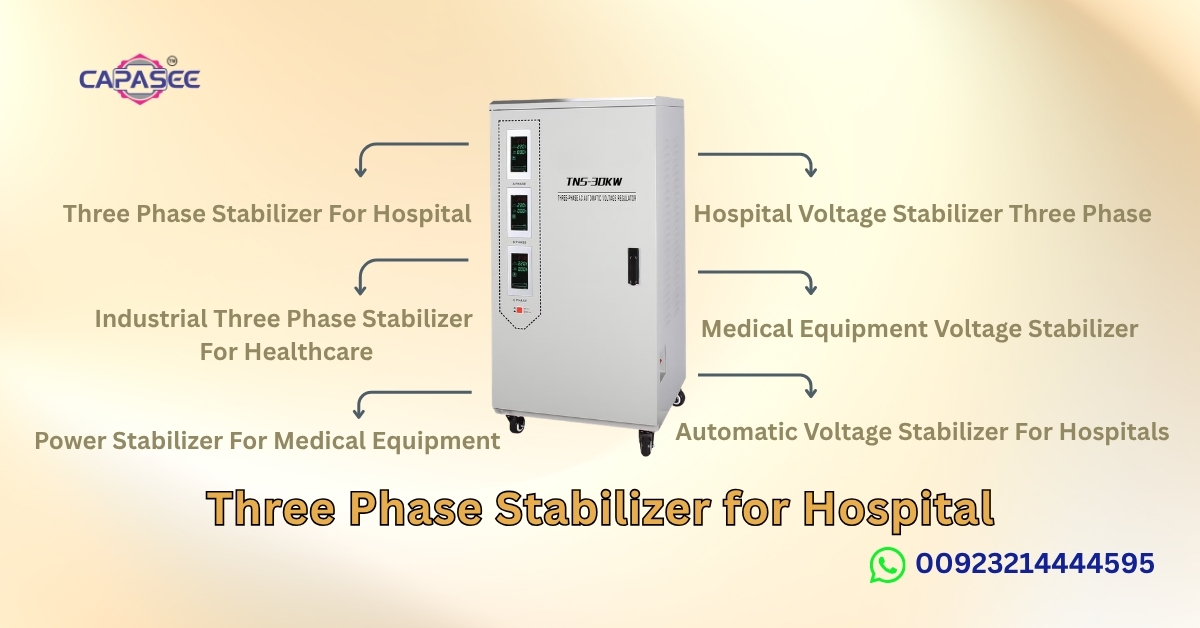
The Capasee range of medical stabilizers includes both single phase and three phase designs, with power ratings to match everything from a single ultrasound to an entire radiology suite. The range is equipped with surge protection, digital display, and auto restart, giving total control to the facility manager using a stabilizer for medical equipment.
Choosing the Right Stabilizer for Your Medical Setup
Getting it right from the beginning means you save money, avoid installation problems, and protect your equipment in the long run. Phase and capacity are the two most important choices, and they both depend on the equipment you want to stabilise.
This is not always done correctly. Too often, clinics in Pakistan just buy the cheapest stabilizer, only to have the unit trip on full load. This can be avoided by speaking to a knowledgeable supplier, such as Capasee Electro Medical Engineering, before buying.
Single Phase vs Three Phase Options for Clinics
Single phase stabilisers are ideal for small scale clinics; dental chairs, ECG, sonography, patient monitoring devices and small diagnostic equipment. Three phase stabilizers are needed for larger equipment; CT, MRI, digital X-rays and operating theatres.
Crossing phases is a no. Connecting a three phase equipment to a single phase stabilizer will not only not protect the equipment but may also damage it. Be sure to check the phase requirement in the user manual or nameplate on the equipment before placing an order.
Sizing Guide Based on Equipment Power Needs
Stabilizer sizes are in KVA (kilovolt amperes). The general rule of thumb is to choose a stabilizer with a capacity at least 25% more than the total power requirements of your equipment. This allows for surge currents, which are 3 to 5 times the running current of motors used in imaging equipment.
Here’s a sizing guide for some of the more common equipment used in Pakistani medical clinics and hospitals:
| Medical Equipment | Typical Power Draw | Recommended Stabilizer Capacity |
| ECG Machine | 50–100W | 0.5 KVA |
| Ultrasound Machine | 300–600W | 1.5 KVA |
| Digital X-Ray System | 1–3 KW | 5 KVA |
| CT Scanner | 20–50 KW | 75 KVA (3 phase) |
| MRI Machine | 50–100 KW | 150 KVA (3 phase) |
| ICU Ventilator | 150–300W | 1 KVA |
| Operation Theatre Light | 500W–2 KW | 3 KVA |
| Patient Monitor | 100–200W | 0.5 KVA |
Please refer to your equipment manual for the actual wattage of your device, and contact Capasee Electro Medical Engineering to calculate an accurate load before making a final choice of stabilizer for medical equipment.
Check More & Purchase: Our Products
Capasee Stabilizers – Trusted for Pakistan’s Healthcare

Capasee Electro Medical Engineering has earned its reputation in the Pakistani healthcare sector by understanding hospital and clinic needs, providing a reliable stabilizer for medical equipment that performs in the local grid environment, and technical support in the unlikely event it fails.
Capasee is not just an electrical supplier; they know the regulations in the healthcare industry. The grounding, isolation, and placement of stabilisers in clinical environments are different from industrial or commercial supplies. The Capasee team brings that expertise to all projects undertaken.
Why Capasee Excels in Medical Grade Protection
All stabilizers for medical equipment from Capasee Electro Medical Engineering are tested to standards for medical applications. Output accuracy, response to load variations, and thermal stability are tested before stabilizers are shipped for installation.
Capasee also provides the documentation teams of hospital biomedical engineers and hospital compliance officers need datasheets, installation reports, and maintenance records. This is a critical consideration when hospitals seek Joint Commission International Accreditation (JCIA) or adhere to guidelines related to the Drug Regulatory Authority of Pakistan (DRAP).
Easy Installation and Local Support in Pakistan
Capasee services key Pakistani cities such as Karachi, Lahore, Islamabad, Multan, and Faisalabad. The company’s engineers manage site installation, load testing, and commissioning to ensure the stabilizer for medical equipment is correctly integrated with your electrical system.
After sales support can be a deal breaker. Being local means a Capasee technician can be on site much quicker than waiting for an off shore manufacturer’s representative to arrive. For institutions where downtime is a real concern, this is more than a preference; it’s essential.
Frequently Asked Questions
What is a stabilizer for medical equipment?
A stabilizer for medical equipment is a voltage regulator that delivers a consistent and accurate voltage to medical instruments. It helps prevent medical devices from being damaged or compromised by fluctuations, spikes, and brownouts, and keeps them safe and reliable at all times.
Why is a stabilizer essential for medical devices in Pakistan?
The electricity supply in Pakistan is prone to fluctuations, blackouts, and surges. Electrical appliances are engineered for constant input voltage; small variations may lead to malfunctioning, data corruption, or damage to the instruments. Investing in a stabilizer ensures the equipment works correctly and securely, and safeguards a long term investment.
How does Capasee Electro Medical Engineering stabilizer differ from regular ones?
Capasee Electro Medical Engineering stabilizers are designed and calibrated for medical grade equipment, with better voltage regulation (±1% – ±3%) than general domestic stabilizers (±10%). They are rated for actual grid conditions in Pakistan and have complete technical specifications required by hospital biomedical and compliance engineers.
What size stabilizer do I need for hospital equipment?
Choose a KVA rating 25% larger than the total power load. So, for a 500W ultrasound, a 1.5 KVA stabilizer is required. Check with Capasee Electro Medical Engineering to calculate the load for your devices and installation.
Can stabilizers protect MRI and CT scan machines?
Yes, but only three phase, high capacity medical grade stabilizers can protect MRI and CT scan machines. These machines are high power consumers ranging from 20 KW to 100 KW and need special stabilizers with high speed response and high precision output. Regular stabilizers are not safe.
Where to buy stabilizers for medical equipment in Pakistan?
You can buy medical stabilizers from Capasee Electro Medical Engineering, which has branches in Karachi, Lahore, Islamabad, Multan and Faisalabad. Capasee offers site visits to evaluate load, advice on sizing, installation, and follow up services, a one stop solution for hospitals in Pakistan.
Conclusion
The right voltage protection for your medical devices in Pakistan is not an option. The correct stabilizer for medical equipment ensures your equipment operates with pinpoint accuracy, has a longer lifespan, and eliminates the risk of unscheduled downtime, just when you need it most. Hospitals that prioritise voltage protection save money on repairs and invest in patient care, and that is how it should be.Contact Capasee Electro Medical Engineering today for a free load check and recommendations for the best stabilizer for medical equipment based on your configuration. Your devices are too important, and your patients deserve the best.