
Blog
Best Voltage Stabilizer for Hospital in Pakistan

A single surge of power for less than a second can destroy a million dollar ICU ventilator, and in the grid environment of Pakistan, those surges happen daily. If you are a hospital, clinic or diagnostic centre manager, you know that unstable electricity is not a minor inconvenience; it’s a patient safety risk. Operating theatre equipment, MRI machines or cardiac monitors, every critical device relies on clean, regulated power. But most facilities still use off the shelf stabilisers never intended for medical grade loads.
In this guide, we cut through the noise and give you a clear, honest breakdown of the best voltage stabilizer for hospital in Pakistan, what specs actually matter, what sets a medical grade unit apart from a standard one, and why Capasee Electro Medical Engineering has become the trusted name for healthcare facilities across the country. By the end, you will know what to buy and why.
Why Hospitals in Pakistan Need the Best Voltage Stabilizer for Hospital in Pakistan
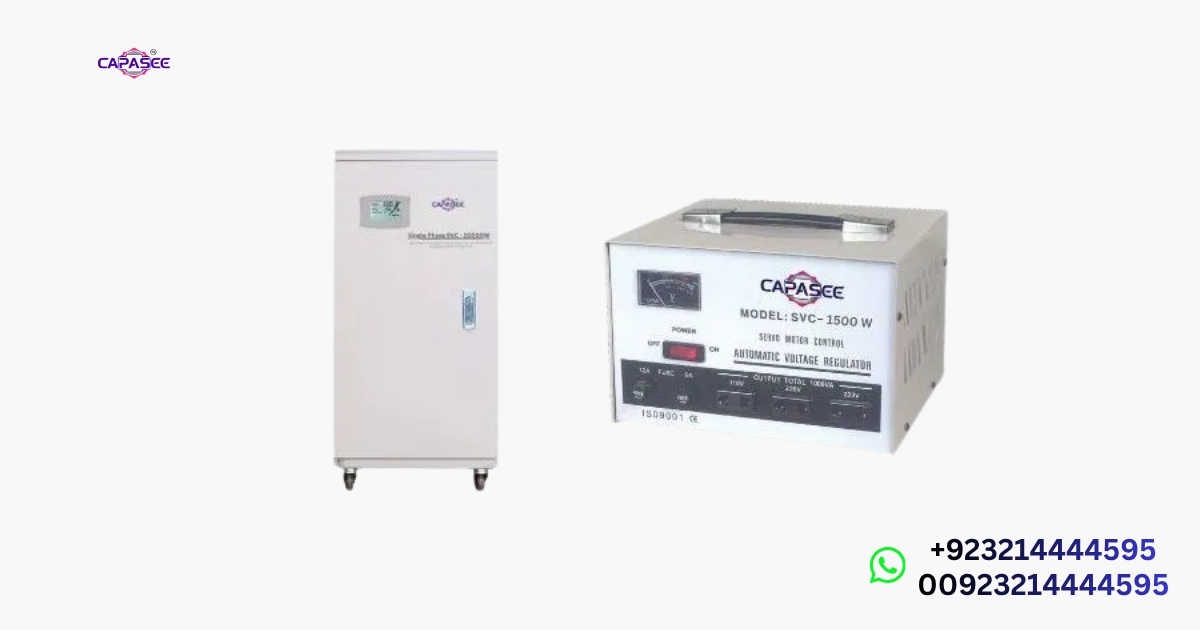
The national grid of Pakistan operates with some of the most erratic voltage levels in South Asia. For instance, in cities like Lahore, Karachi and Peshawar, hospitals face a voltage fluctuation of 160V to 260V in just one hour. And every medical device plugged into that grid is vulnerable without the right safeguards, including the patients who depend on them.
A hospital is not a factory or an office. It powers life critical devices 24/7, and even a brief power anomaly can corrupt data on a patient monitor, trigger a false alarm on a ventilator or permanently damage an expensive imaging system. Selecting the best voltage stabilizer for hospital in Pakistan is not just a buying decision; it is a medical responsibility.
How Voltage Fluctuations Damage Critical Medical Equipment in Pakistani Hospitals
Voltage fluctuations attack medical equipment in two ways. One is a sudden spike in voltage that physically burns components. The other is a slow under voltage condition that makes motors and transformers work harder than they are designed to. Both situations significantly decrease the equipment life span and increase the likelihood of device failure during patient care using the best voltage stabilizer for hospital in Pakistan.
In the case of a 200 bed hospital in Faisalabad, a digital Xray unit failed repeatedly for a period of 18 months. The root cause was not a manufacturing defect; it was poor voltage protection that allowed repeated brownouts to stress the imaging system’s power supply. Switched to a medical grade stabiliser, reducing downtime for equipment by over 70%. The same pattern is repeated in the hospitals across Pakistan every year with the best voltage stabilizer for hospital in Pakistan.
Key Safety and Performance Standards for Medical Voltage Stabilizers in Pakistan
Medical voltage stabilisers have to meet standards for which general purpose units are simply not built. IEC 60601 is for the safety of electrical equipment in medical environments. ISO 13485 is for quality management systems for medical devices and related infrastructure. Any stabiliser installed in a clinical setting should conform to both.
In Pakistan, the Pakistan Standards and Quality Control Authority (PSQCA) also sets minimum compliance requirements for electrical equipment. If a hospital buys a stabiliser without checking these standards, it could be held liable if the equipment fails. A compliant, certified stabiliser is not an upgrade. It is the minimum standard that is acceptable for any healthcare facility using the best voltage stabilizer for hospital in Pakistan.
How to Choose the Best Voltage Stabilizer for Hospital in Pakistan: A Step by Step Guide
The first step in selecting an appropriate stabiliser is to find out the total electrical load of your hospital accurately and then select a unit with the correct specifications to cater to the load. Most hospitals in Pakistan are buying on price without understanding the impact of KVA rating, correction speed or input voltage range on actual performance in Pakistan’s grid conditions.
The selection process consists of 5 steps, which include the following; Calculating total equipment load in KVA. Finding out your facility’s recorded voltage range from the local WAPDA or LESCO supply. Deciding on an acceptable response time for your most sensitive device. Checking safety certifications. Assessing after sales support. If you skip any of these steps, you end up with either under protected equipment or a system that is too big and wastes budget while selecting the best voltage stabilizer for hospital in Pakistan.
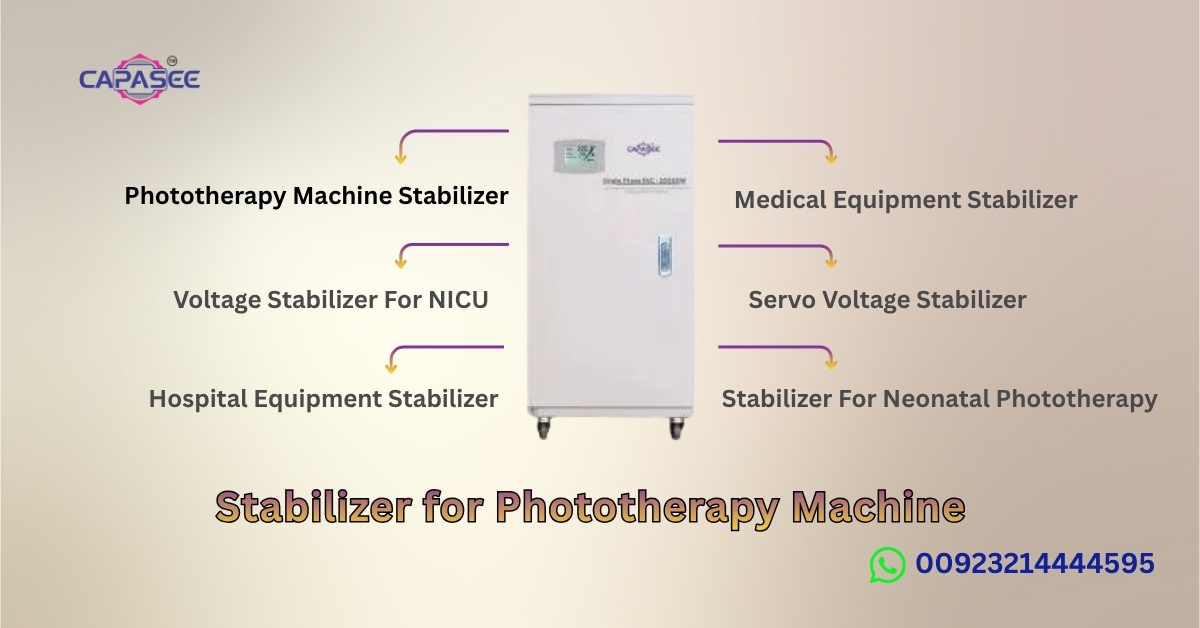
You May Also Read This Blog: Stabilizer for Phototherapy Machine
Essential Specifications: KVA Rating, Correction Speed, and Voltage Range for Hospitals
Different departments in a hospital have different power demands. The KVA requirements of an ICU with infusion pumps, bedside monitors and ventilators will be very different from a general ward. The prerequisite for a proper installation is to match the actual load to the capacity of the stabiliser with a safety margin of at least 20%.
The table below lists the minimum technical requirements any stabiliser must satisfy to be eligible for use in hospitals in Pakistan:
| Feature | Minimum Requirement for Hospital Use | Why It Matters |
| KVA Capacity | 10 KVA to 50 KVA (based on equipment load) | Prevents overload during peak usage |
| Voltage Correction Speed | Under 10ms (servo or static) | Protects life support devices from sudden spikes |
| Voltage Range | 140V to 280V input tolerance | Handles Pakistan’s extreme grid fluctuations |
| Safety Features | Overload, short circuit, thermal shutdown | Ensures uninterrupted patient care |
| Compliance | IEC 60601, ISO 13485 | Meets medical electrical system standards |
If a stabiliser cannot correct the voltage within 10 milliseconds, then it is too slow for some of the devices, such as infusion pumps or cardiac monitors, where a small dip can trigger alarms or cessation of operation. If a stabiliser cannot correct the voltage within 10 milliseconds, then it is too slow for some of the devices, such as infusion pumps or cardiac monitors, where a small dip can trigger alarms or cessation of operation. This one spec is what makes or breaks a general purpose unit from a true medical grade solution. This one spec is what makes or breaks a general purpose unit from a true medical grade solution.
Servo vs. Static Voltage Stabilizers: Which Is Best for Hospital Equipment in Pakistan?
Servo voltage stabilisers use a motorised mechanism to correct the voltage over a period of time and accurately. They are very good for wide input ranges and are perfect for heavy loads such as CT scanners, MRI support systems and central air conditioning in large hospitals. The correction speed is usually 10ms to 20ms, which is usually acceptable for most equipment but borderline for the most sensitive devices.
Static voltage stabilisers correct in under 5 milliseconds by using electronic switching with no moving parts. Static stabilisers are the safer option for operating theatres, ICUs, or any place that runs life support equipment. They are more expensive up front, but they do away with the mechanical wear issues that servo units suffer from in environments where load variation is constant, which is the case on almost every active hospital floor in Pakistan using the best voltage stabilizer for hospital in Pakistan.
Check More & Purchase: Our Products
Top Features of Capasee Best Voltage Stabilizer for Hospital in Pakistan
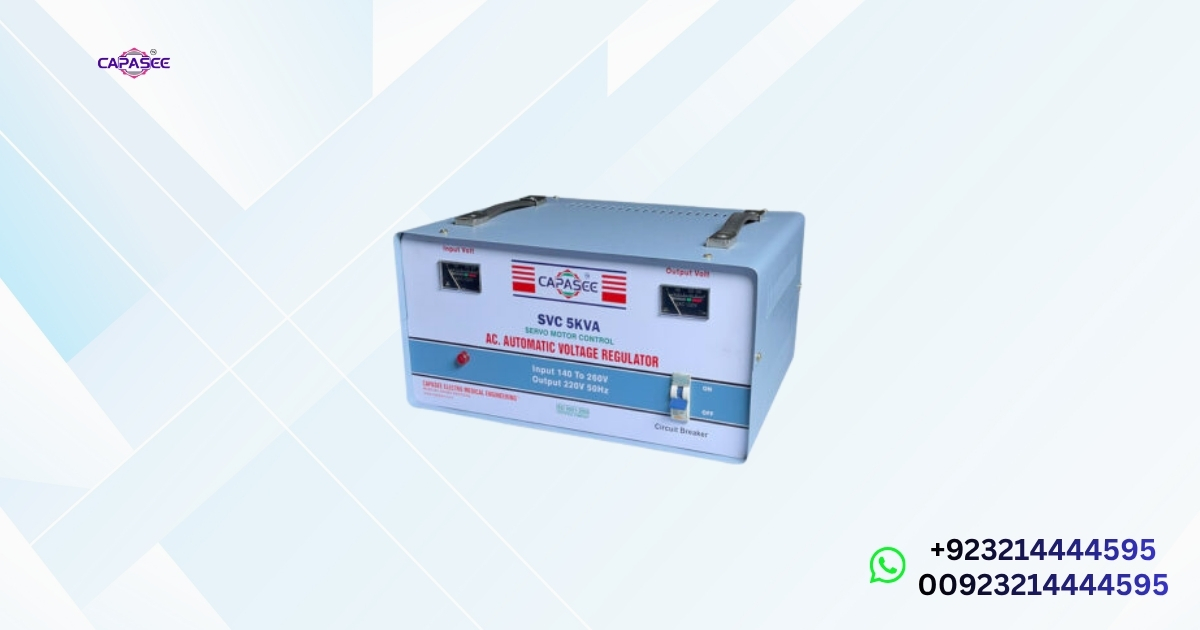
Capasee Electro Medical Engineering hospital grade stabilisers are designed for the voltage conditions across Pakistan’s distribution networks. These are not rebadged general purpose units. All Capasee stabilisers for medical use are designed with clinical environments in mind, from the input tolerance range to the alarm and monitoring systems built into the control panel.
It’s not just the hardware that makes Capasee different. Before installation, full load assessment services are provided by the company so that the right unit is fitted to your facility to meet its precise requirements. Hospitals don’t guess with this consultative approach; they are installing with precision, backed by local engineering expertise that understands how WAPDA and LESCO supplies behave in different regions of Pakistan with the best voltage stabilizer for hospital in Pakistan.
Advanced Protection and Monitoring Features in Capasee Electro Medical Engineering Stabilizers
The Capasee stabilisers have many types of protection; overvoltage cut off, undervoltage bypass, short circuit protection, and thermal overload shutdown, combined in one unit. Each protection layer operates independently; a thermal event does not disable voltage correction, and an overvoltage trip does not affect the bypass relay. This layered architecture shields equipment under complex fault conditions.
The Capasee units are equipped with a digital monitoring panel showing real time input voltage, output voltage, load percentage and operational temperature. This data is available at a glance to hospital biomedical engineers, without opening the unit or hooking up external test equipment. Capasee has models that are compatible with building management systems already in place at larger hospitals, with RS 485 communication ports for those facilities that need to monitor remotely.
Why Capasee Stabilizers Are the Most Reliable Choice for Pakistani Hospitals
Reliability in a hospital means two things; the unit has to work every time, and there has to be support when it is needed. Capasee has a dedicated after sales and maintenance team with service coverage in major cities, including Lahore, Karachi, Islamabad, Multan and Faisalabad. Locally stocking replacement parts eliminates the weeks long delays common to servicing imported equipment.
Capasee also offers annual maintenance contracts specifically designed for healthcare facilities with scheduled inspections, calibration verification, and priority response for critical care areas. This combination of certified hardware and structured support makes Capasee the most pragmatic and reliable choice for hospital administrators trying to manage budgets and compliance audits at the same time in the Pakistani market today using the best voltage stabilizer for hospital in Pakistan.
Frequently Asked Questions
What is the best voltage stabilizer for hospital equipment in Pakistan?
The best voltage stabilizer for hospital in Pakistan is a medical grade stabilizer whose correction speed is less than 10 ms, input voltage tolerance is 140 V to 280 V, and it has IEC 60601 compliance. Capasee Electro Medical Engineering manufactures purpose made stabilizers for all clinical settings in Pakistan, including ICUs, diagnostic imaging rooms, etc.
How much KVA stabilizer does a hospital need in Pakistan?
In Pakistan, the connected equipment load is the factor of choice for most hospitals, ranging from 10KVA to 50KVA. Work out your KVAr rating and then add a 20% margin. Capasee provides free load assessment services to ensure that the facility selects the appropriate size of the unit before buying it.
What voltage range should a hospital stabilizer support in Pakistan?
For a hospital stabilizer in Pakistan, the range of input voltage should be between 140V and 280V. The grid in Pakistan suffers from regular under and overvoltage periods during load shedding and restoration, respectively, with the average grid voltage falling below 180V in load shedding areas and exceeding 250V during restoration. The stabilizer’s output is stable with a wide tolerance range, so it won’t trip for common fluctuations.
Are servo or static stabilizers better for medical equipment?
Static stabilizers are also suitable for sensitive medical equipment such as cardiac monitors and ventilators, which require under 5 ms correction of voltage and have no moving parts. The servo stabilizers are suitable for heavy loads such as CT scanners, but react slightly slower. The recommended model for ICUs and operating theatres is a static model from Capasee Electro Medical Engineering.
How long does a hospital voltage stabilizer last in Pakistan?
With maintenance, a good hospital voltage stabilizer can last from 8 to 15 years. Static models also last longer than servos since static models do not have any mechanical parts to wear out. Capasee provides annually renewed contracts for the stabilizer to keep using the unit for a longer life and to keep it at the standard of performance throughout the operational life of the unit.
Does Capasee Electro Medical Engineering provide warranty for hospital stabilizers?
Yes, Capasee Electro Medical Engineering offers a warranty for hospital grade stabilizers, along with structured after sales support. Warranty terms are different for each model and for each KVA rating. The company also provides priority service agreements for critical care areas, providing quick response times when power protection is of critical importance for hospital operations.
Summary
In a hospital, stable power is a must. It is the unseen infrastructure that keeps all the monitors and ventilators, the surgical equipment running just as they were designed. The three key choices can safeguard your equipment and your patients; the right specifications, the difference between servo technology and static technology, and working with a company that has an understanding of Pakistan’s grid conditions.
Selecting the most appropriate best voltage stabilizer for hospital in Pakistan is not only a product selection but also a partnership. Capasee Electro Medical Engineering installs certified hardware and provides local engineering expertise and long term maintenance support for all installations. Call Capasee today, get a free load assessment, and save your facility from the next power surge.
No downtime is an option for your patients. Neither can you.