
Blog
Stabilizer for Phototherapy Machine

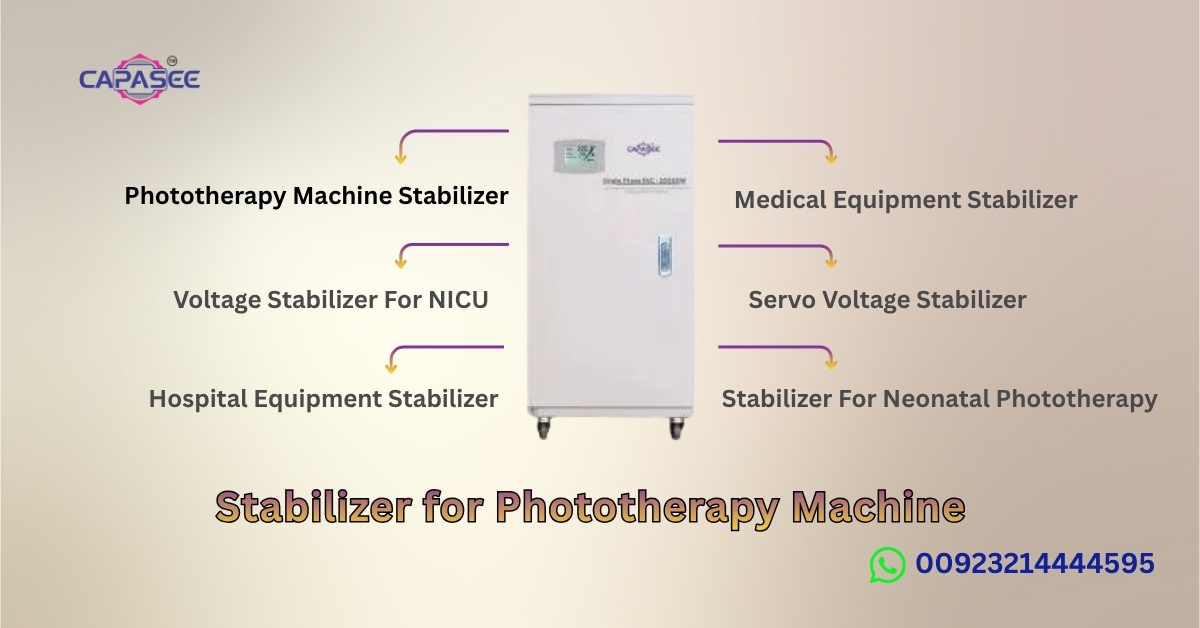
One voltage spike can ruin a phototherapy machine worth hundreds of thousands of rupees, and in Pakistan’s notoriously shaky power grid, it’s not a matter of if but when. However, numerous clinics, hospitals, and neonatal units are still operating their phototherapy units without a dedicated stabilizer for phototherapy machine, allowing the precision medical equipment to remain completely vulnerable to fluctuations, surges, and brownouts. A good stabilizer for use with a phototherapy machine is not a luxury item; it’s a first line defence product that will help to safeguard your machine and your patient results.
We at Capasee Electro Medical Engineering have observed the effect of unregulated power on critical medical devices in healthcare facilities all over Pakistan. Whether you’re installing a new neonatal ward or upgrading an existing unit, you’ll get all the answers you need on everything from what makes a phototherapy stabilizer essential to what specs to look for.
Why You Need a Stabilizer for Phototherapy Machine in Pakistan
Power supply issues are quite different in urban areas, towns, and rural healthcare facilities in Pakistan. A steady 220V can fluctuate from 160V to 260V and sometimes even between 160V and 260V in the same hour. That variation isn’t convenient for normal appliances. It could be disastrous for a phototherapy machine for a newborn with jaundice.
For hospitals and clinics that invest in quality phototherapy devices but do not include the stabilizer, it is like leaving a lifesaving device in an unsecured state. The problem is solved with the use of a stabilizer for phototherapy machine, which regulates the incoming voltage before it reaches the sensitive parts of the machine.
How Voltage Fluctuations Affect Phototherapy Machines in Hospitals
Phototherapy machines are based on a set of LED lights (arrays) or fluorescent tube lights that provide therapeutic light at a specific wavelength, usually in the range of 430 nm to 490 nm. The amount of this light is directly related to the treatment of neonatal jaundice; if the voltage of electricity is decreasing or increasing, then the amount of this light will also change.
The other effects of unstable voltage include faster deterioration of inboard circuit boards, power supplies, and cooling fans. In Lahore, a facility reported two instances of failure of the phototherapy unit within six months, both due to repeated brownouts during the evening load shedding periods. That problem was finally solved 100% with one stabilizer for phototherapy machine installation.
Risks of Using Phototherapy Machines Without a Dedicated Stabilizer
Three potential hazards can occur if you are operating a phototherapy machine without voltage protection; the machine can burn out during a high voltage surge, the machine may not produce full power outputs during brownouts, and LED life may be limited to normal power draw, which may cause degradation over time.
Also, there is a patient safety aspect. When a machine supplies subtherapeutic light without giving an audible alarm, a baby may not be receiving adequate therapy, but the staff appears to have no problem. A stabilizer for phototherapy machine will ensure output is maintained and remove that hidden clinical risk.
You May Also Read This Blog: Stabilizer for Home Appliances in Pakistan
Choosing the Right Stabilizer for Phototherapy Machine
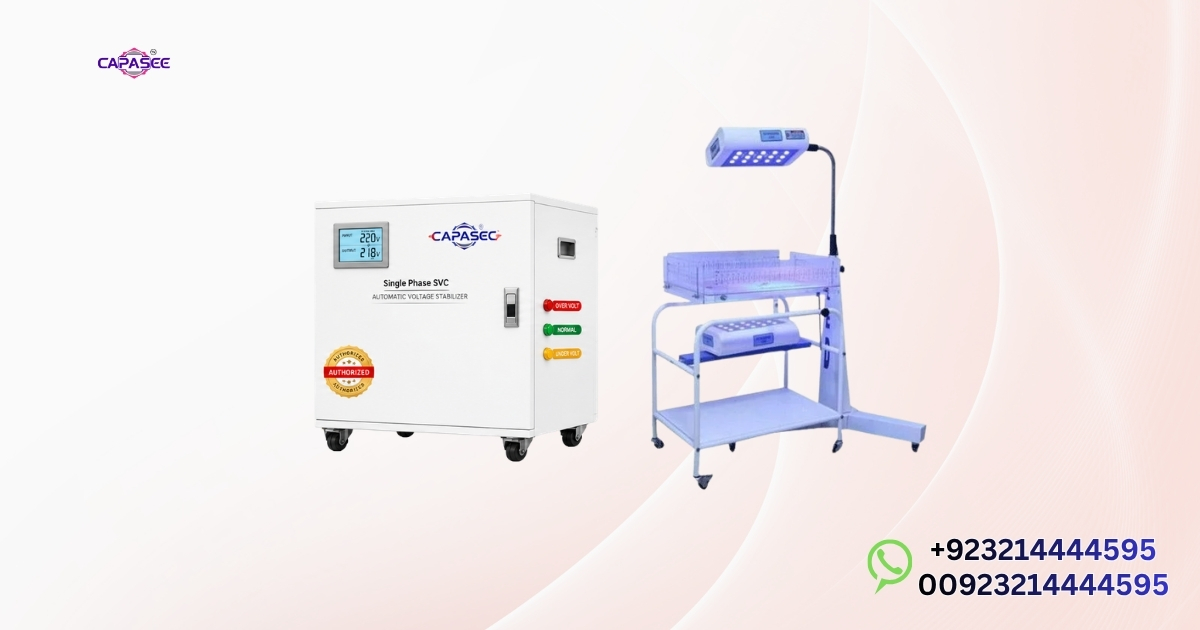
Not all stabilizers are suitable for use with medical grade phototherapy equipment. The right unit needs to be powerful enough for the machine, react quickly enough to shield sensitive electronics, and even be equipped with protection elements that are relevant to the hospital setting.
The two most important considerations are the kVA rating vs the power draw of the phototherapy machine and the machine and type of stabilizer technology. If either of these is incorrect, you’re either undersizing the protection circuit or you’re wasting money on a circuit that provides more protection than you need.
What kVA Capacity Stabilizer Is Ideal for a Phototherapy Machine
Typical phototherapy machines require 150W to 400W of power. If using the phototherapy machine with a neonatal incubator or other equipment that uses a neonatal circuit, this is where a stabilizer rated at 2 kVA would be used to provide a safe buffer for single unit protection.
The standard approach of biomedical engineers in Pakistan is to take 1.25 times the maximum wattage of the machine to calculate the minimum capacity of the stabilizer required. This 25% headroom allows the stabilizer to operate without running a full load and thus has a much longer operational life.
Digital vs Automatic Stabilizer for Phototherapy Machine: Which Is Better?
There are two types of stabilizers to protect against voltage fluctuation, digital and automatic (servo type). Both types do it differently and are appropriate for different clinical settings. If you have a phototherapy machine, it depends on the severity of voltage instability in your ward and how quickly the corrections must occur.
The digital stabilizers are equipped with relay based or SMPS technology, which ensures the switching between preset voltage levels within milliseconds. Servotype automatic stabilizers have a motorized system that provides a greater range of input correction but is somewhat slower. In NICUs or maternity wards with extreme variations, a digital or static stabilizer will be a more suitable option.
| Parameter | Details |
| Stabilizer Type | Digital (relay/static) vs Automatic (servo motor) for phototherapy use in Pakistan |
| Voltage Range | Input: 130V to 280V; Output: 220V (±2%) for stable hospital power supply |
| Response Time | Digital: under 20ms; Servo: 5 to 15 seconds — critical for sensitive phototherapy LEDs |
| Protection Features | Surge protection, overload cutoff, short circuit guard, soft start for LED safety |
| Usage Environment | ICU, maternity ward, NICU, home care neonatal setup |
Capasee Solutions: Stabilizers for Phototherapy Machines in Pakistan
Capasee Electro Medical Engineering is known for providing and maintaining biomedical equipment in Pakistan’s healthcare landscape, which operates in a reliable manner in the actual environment. That encompasses voltage stabilizers specifically picked and configured for use to shield the phototherapy machine.
Capasee knows the clinical context, unlike general purpose electrical vendors. Each stabilizer solution suggested for phototherapy use is tested for compatibility with the specific machine model, the ward’s electrical setup, and the local electrical grid at the facility.
How Capasee Stabilizers Protect Phototherapy Machines in Hospitals and Clinics
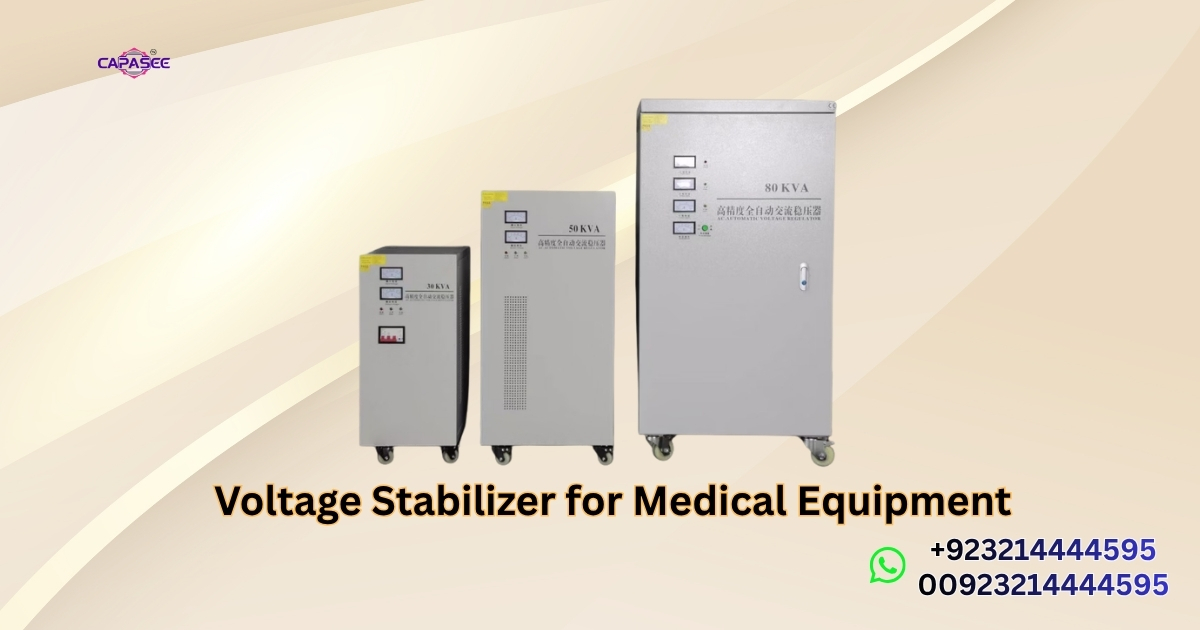
Medical grade stabilizers, supplied by Capasee, accept a wide voltage range with a common input voltage of 130V to 280V, making them functional even during the worst load shedding recovery surges in Pakistani cities. The units have softstart circuits to eliminate voltage transients at startup, which is the most common reason LED drivers fail prematurely.
Capasee also offers on site installation and post installation testing to ensure the output voltage stability of the phototherapy machine before it is returned to patient service to hospitals and clinics throughout Punjab, Sindh, KPK, and Balochistan. What makes a reliable biomedical equipment partner stand out from a general retailer is the ability to support them from end to end.
Buying Guide: Stabilizer for Phototherapy Machine Price in Pakistan
The pricing of stabilizer for phototherapy machine units in Pakistan varies based on the capacity, technology type, and quality of the brand. The prices of entry level 1 kVA for a single phototherapy machine are between PKR 8,000 and 18,000. Medical grade units that have a wider input range, faster response time, and built in surge protection come in between PKR 20,000 and PKR 45,000, depending on specifications.
Capasee offers clear pricing with no hidden charges and will recommend the appropriate specification to fit your phototherapy unit and not attempt to upsell you unnecessary capacity. Capasee provides institutional pricing for bulk orders for hospitals and government health departments with a service agreement.
Check More & Purchase: Our Products
Technical and Installation Considerations for Phototherapy Machine Stabilizers
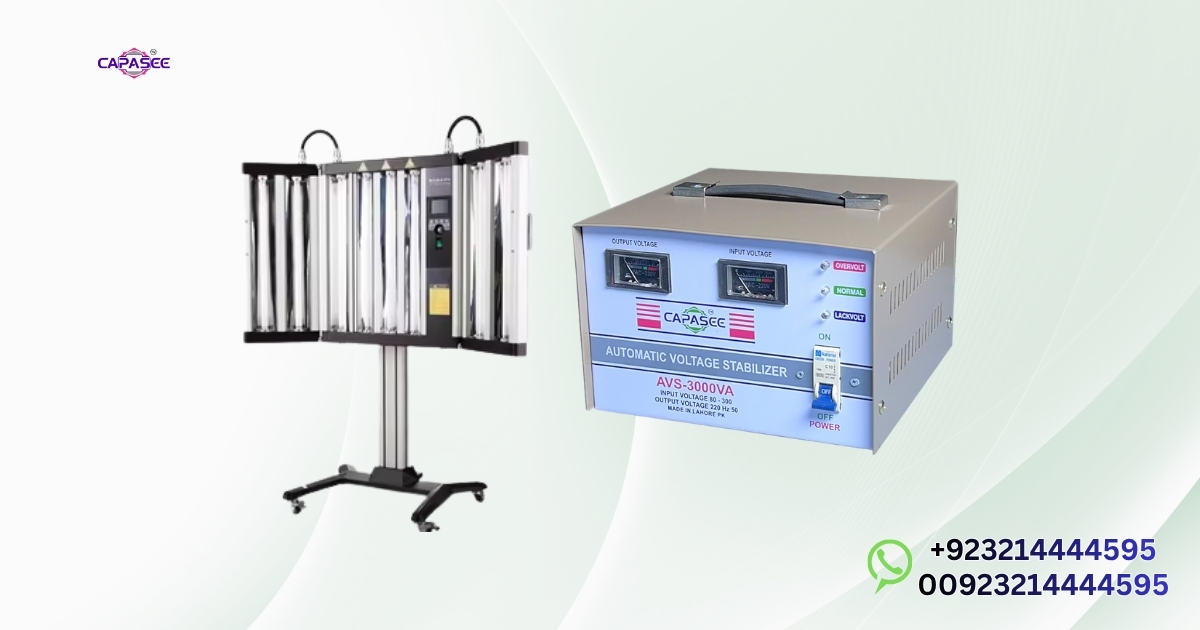
It is as important to install it right as it is to choose the right stabilizer for phototherapy machine. If the stabilizer is specified incorrectly or installed incorrectly, it will not provide complete protection. Capasee’s biomedical engineers adhere to a precise installation procedure for each deployment of a phototherapy stabilizer.
Factors such as the distance of the stabilizer from the machine, the cable gauge for the connection, the earth quality in the ward and the ventilation around the stabilizer itself are all important. All these factors have an impact on the efficacy of the stabilizer for phototherapy machine during continuous clinical use.
Where to Place the Stabilizer for Phototherapy Machine in a Ward
The stabilizer for phototherapy machine should be placed as close as possible to the phototherapy machine, preferably 1 to 1.5 metres away, to avoid the voltage drop along the connecting cable. Must be set on a firm, level surface, with a minimum of 15cm of clearance around each side for heat dissipation.
In NICU and maternity wards, do not have the stabilizer on the floor where cleaning water or disinfectant spills may occur. The unit is mounted on a bracket or a specially designed equipment shelf to ensure its safety and allow the casing to be air cooled while it is in use.
Maintenance Tips to Extend the Life of Your Phototherapy Machine Stabilizer
Just like any other machine, the stabilizer that keeps your phototherapy machine stable must be maintained over time. Test the input and output voltage readings under load every three months to ensure that the unit is correcting within its rated tolerance. The output should not exceed plus or minus 5V from 220V; if it does, the unit should be serviced.
Regularly clean the ventilation slots of dust, particularly in wards where cotton lint or environmental particles tend to collect. In automatic stabilizers that are of the servo type, the motor brushes must be checked once a year. The biomedical service team from Capasee provides preventive maintenance services for all the stabilizer for phototherapy machine units supplied, ensuring that you’re protected from the moment the unit is delivered until the end of its service life with your phototherapy.
FAQ’s
What is the best stabilizer for phototherapy machine in Pakistan?
A medical grade unit, either digital or static, with a wide input range (130V to 280V) and a quick response time (less than 20ms), is best suited for the use of a phototherapy machine in Pakistan. Capasee Electro Medical Engineering offers tested and hospital ready stabilizers that are designed according to Pakistan’s grid conditions.
How many kVA stabilizer is required for a phototherapy machine?
A 1 kVA stabilizer can be used for a single phototherapy machine with a maximum power consumption of 400 W. When extra neonatal equipment is on the same circuit, the bigger, 2 kVA unit is safer. Remember the 1.25x wattage rule when calculating your minimum requirement.
Can I use a home stabilizer for a phototherapy machine in a hospital or clinic?
No, the stabilizer used in the home is not suitable for use in clinical phototherapy. Phototherapy machines must also have fast response time, soft start protection, and medical grade surge suppression, which are not provided by home units. An undersized or non medical stabilizer can result in equipment damage and/or inconsistent treatment of the patient.
Does a digital stabilizer for phototherapy machine require extra maintenance?
Unlike servo type stabilizers, digital stabilizers have no moving parts and thus are easy to maintain. Just an occasional measurement of input and output voltage every quarter, and ensuring that ventilation slots are kept free of dust is enough. Every stabilizer supplied by Capasee Electro Medical Engineering comes with routine maintenance support.
Where can I buy a genuine stabilizer for phototherapy machine in Lahore, Karachi, or Islamabad?
Capasee Electro Medical Engineering offers only authentic, medically safe stabilizers in Lahore, Islamabad, Karachi, and throughout Pakistan. Call Capasee for specifications, pricing, and installation on site at your hospital or clinic.
How does a dedicated stabilizer improve the performance and safety of phototherapy machines?
A dedicated stabilizer will regulate the output to 220V even if the power grid fluctuates, ensuring that the irradiance level of the LED light source is kept at the correct therapeutic wavelength during phototherapy. This safeguards the machine’s internals and ensures that the patient gets proper and continuous neonatal jaundice treatment during each session.
Summary
The first sensible step towards protecting the equipment for phototherapy is to install a stabilizer that is properly rated and medically compatible with your phototherapy machine before a power fluctuation necessitates a much higher cost one. The unpredictable grid does not spare unprotected medical equipment, and neonatal care units in Pakistan cannot afford clinical downtime or a failure of equipment.
By pairing the correct stabilizer capacity, stabilizer technology, and installation practice with the correct unit, you achieve greater equipment life, safeguard patient outcomes, and lower long term maintenance costs.Call Capasee Electro Medical Engineering today to get your facility the perfect stabilizer for phototherapy machine. Phototherapy machines are an expensive piece of equipment; treat them as such.