
Blog
Servo Motor Voltage Stabilizer for Hospital

Even a single voltage spike of less than three seconds can cause a ventilator to shut down, an MRI scan to be corrupted, or an ICU monitor to issue a false alarm, and in the reality of the power grid system in Pakistan, the danger is not speculative, but everyday. The Karachi, Lahore, Multan, and Peshawar hospitals work under the continuous fluctuation of voltage, load shedding cycles, and sudden surges, which can be simply handled by standard stabilizers, but not fast enough. This precisely explains why a servo motor voltage stabilizer for hospital settings has become non negotiable infrastructure, not an upgrade.
As opposed to traditional units, powered by relays, servo controlled stabilizers correct voltage in real time with the accuracy that is required of medical grade equipment. This guide will show you how these stabilizers work, why hospitals in particular need them, what technical specifications to consider, and how Capasee Electro Medical Engineering can provide the solutions to be built under the unique grid conditions of Pakistan.
Why Hospitals Need a Servo Motor Voltage Stabilizer
Hospitals are not similar to offices or a factory. All the equipment in a hospital, including a simple ECG monitor and the most expensive surgical laser, uses electricity, which must be kept within a very narrow voltage range. A hospital servo motor voltage stabilizer for hospital environments is the first line of defense against failure of equipment, patient risk, and expensive repairs.
Although the power infrastructure in Pakistan has been improving in urban centers, it continues to provide uneven voltage in the majority of the cities and towns. Those hospitals that do not have the correct voltage regulation and are instead relying on standard grid supply are gambling with the lives of patients every single day. Capasee Electro Medical Engineering has collaborated with dozens of hospitals across Punjab and Sindh, which had gone through precisely this issue before shifting to the servo controlled stabilization.
Voltage Fluctuation Problems in Pakistani Hospitals
Voltage instability in Pakistan is not something uncommon; it is something commonplace. The networks supplied by WAPDA and LESCO regularly experience swings in voltage between 170 V and 260 V within the same day, with peaks occurring at the same times during peak summer periods when industrial and residential loads reach their peaks concurrently, making the use of a servo motor voltage stabilizer for a hospital essential.
In the case of a hospital, this poses serious issues. Particularly sensitive equipment, such as diagnostic imaging equipment, such as X-ray machines and ultrasound units, is especially sensitive; even a reduction in supply voltage of 10% can cause a distortion in the quality of output or cause automatic shutdowns. There are numerous cases of transformer burnouts and motherboard failures in the medical equipment directly linked to uncontrolled increases and decreases of voltages, which can be minimized by a servo motor voltage stabilizer for hospital.
You May Also Read This Blog: Stabilizer Manufacturer Pakistan
How Stable Power Protects Medical Equipment
When the voltage is constant within a range of plus or minus 1%, sensitive medical equipment works in a manner that it was designed to work. This has a direct impact on the wear of internal components, equipment lifespan, and has the effect of preventing issues through the use of a servo motor voltage stabilizer for hospital. dangerous mid process shutdowns.
Take a case study, an operating room that is running an electrosurgical unit and an anesthesia machine at the same time. At different moments, both loads vary. Lack of constant incoming voltage exposes the two devices to microsurges and brownouts, which cause damage over time. The servo motor stabilizers of Capasee make sure that the output of the unit is a steady 220 V regardless of the actions of the incoming supply, providing clinical teams with the reliability they require, especially when using a servo motor voltage stabilizer for hospital applications.
How a Servo Motor Voltage Stabilizer Works in Hospital Use
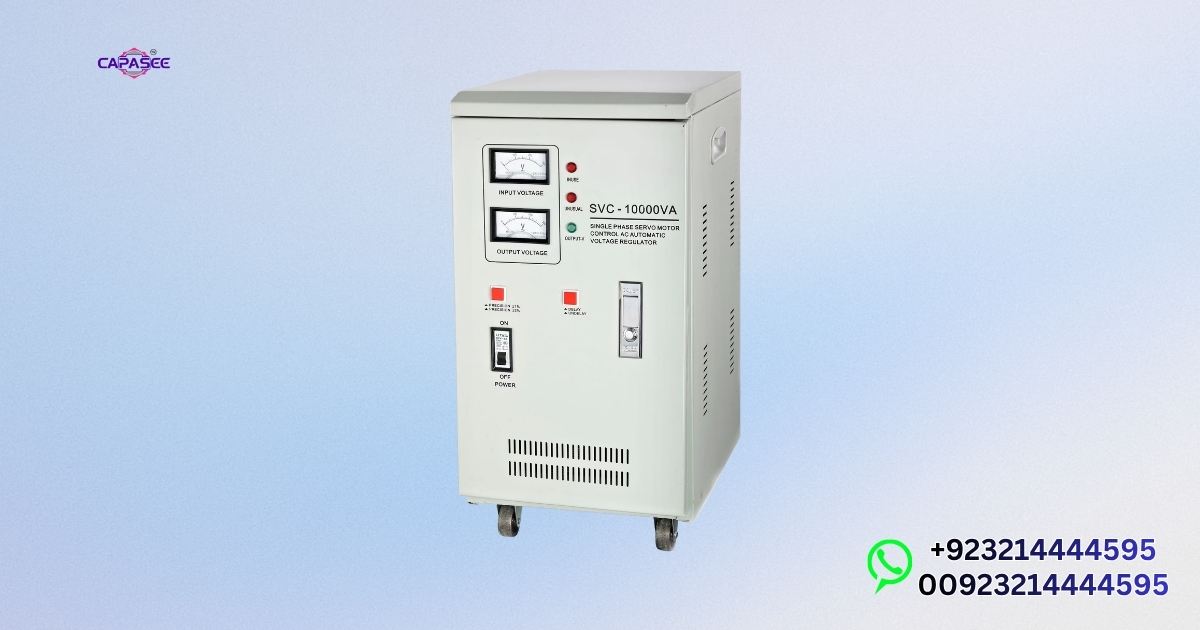
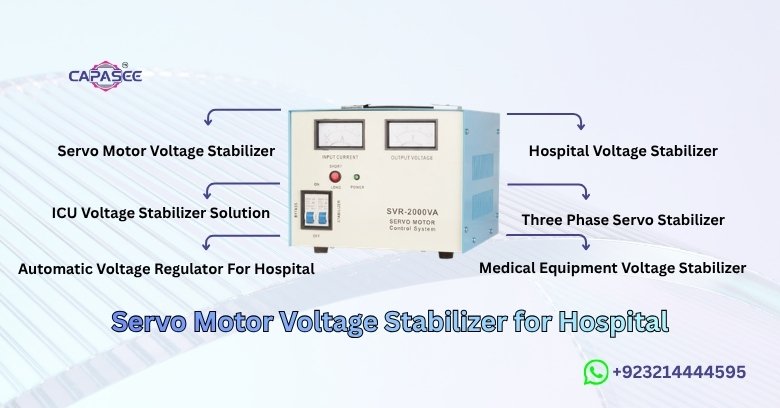
A servo motor voltage stabilizer for hospital is an automated and continuous motorized variac (variable autotransformer) voltage corrector controlled by an electronic sensing circuit. In contrast to relay based stabilizers that switch between fixed steps, servo units provide smooth, non stepped adjustments, which is exactly what medical grade equipment needs.
Most voltage drops or surges are corrected before the connected device can even notice a change, and the typical correction rate of a good quality servo stabilizer is 10 to 15 volts per second. It is this real time correction system that sets servo technology apart in comparison with the older stabilizer design that is still in use in many Pakistani healthcare facilities.
Automatic Voltage Correction for Sensitive Devices
The fundamental element of the servo system is a feedback loop. A voltage sensing circuit is a circuit that continuously compares the actual output to the desired output. On detecting a discrepancy, it sends an impulse to the servo motor, which moves the variac in the right direction to restore the voltage within the range.
This is repeated dozens of times per minute in changing grid conditions. In the case of ICU equipment, dialysis machines, and cardiac monitors, such an invisible protection is truly noticeable. A hospital in Lahore that installed Capasee servo stabilizers reported a 40% decrease in equipment servicing calls during the first year of use of a servo motor voltage stabilizer for hospital.
Key Components and Output Control in Medical Environments
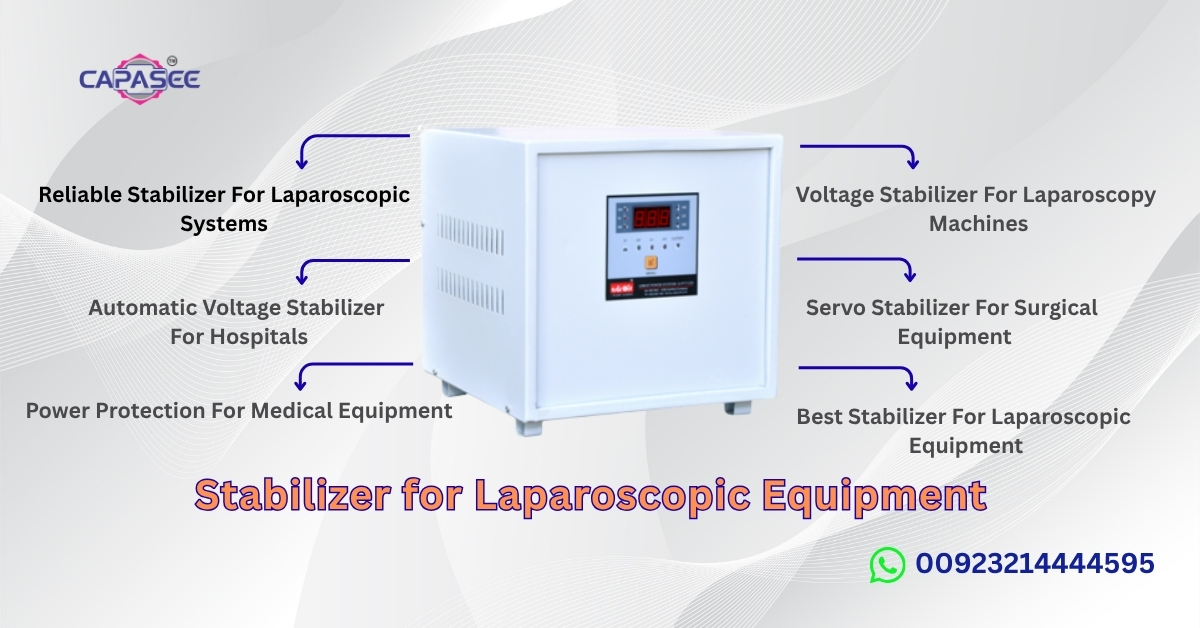
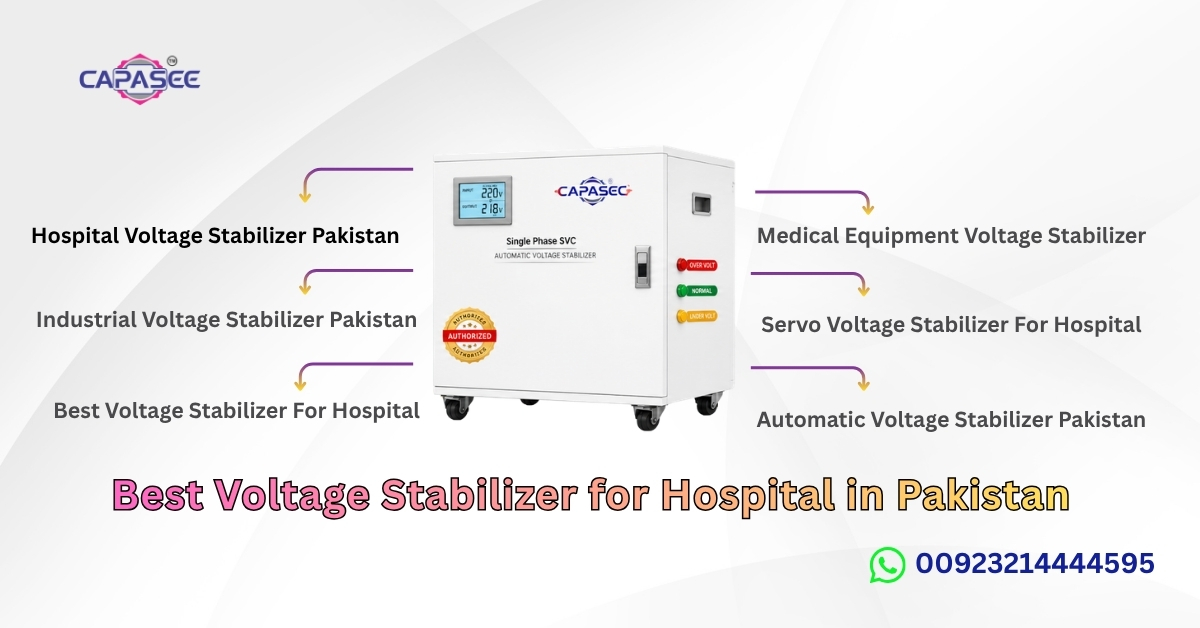
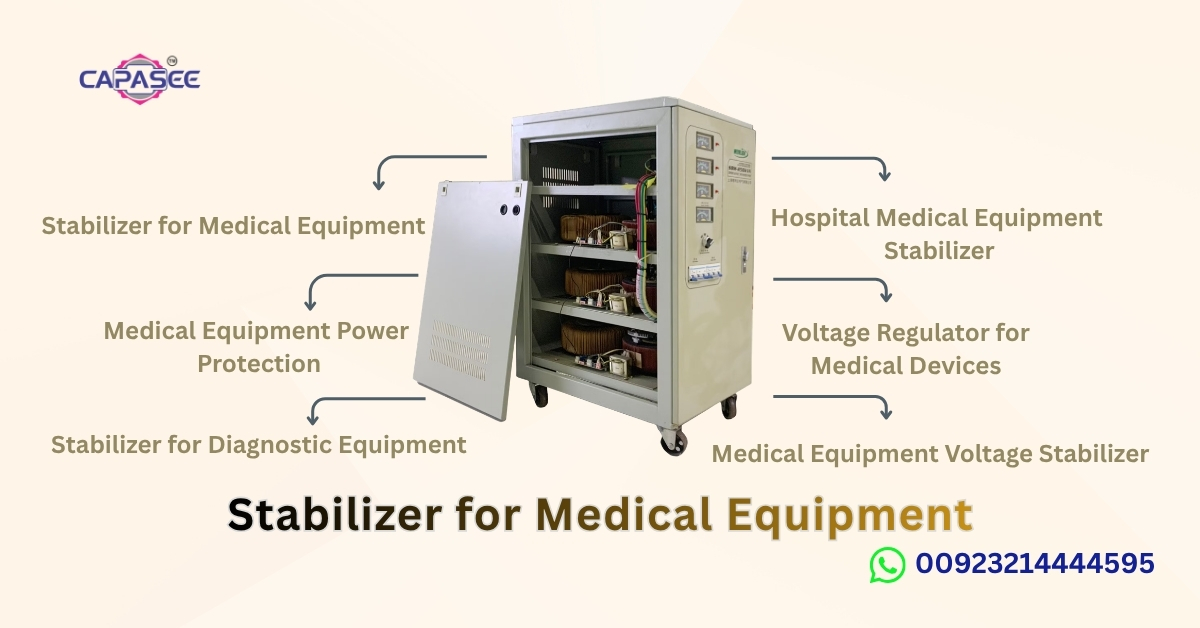
A hospital grade servo motor voltage stabilizer for hospital has several important parts; the servo motor itself, the motorized variac, a microcontroller based sensing unit, bypass switches, and input/output MCBs (miniature circuit breakers) to provide protection.
All the parts contribute to maintaining clean and stable production. An example of this is the bypass switch, which enables the engineering team at the hospital to switch to direct supply during maintenance without powering down the equipment connected to the switch. Capasee engineers preset output voltage tolerance to within plus or minus 1% at the factory level, and then each unit is subjected to a full load test before being delivered to any hospital or clinic.
Best Servo Motor Voltage Stabilizer Options for Hospitals in Pakistan
The decision to adopt the appropriate stabilizer in a hospital is a matter of matching appropriate capacity with the appropriate clinical area. A 5 KVA unit that will work perfectly well in a small diagnostic lab will be dangerously small in an imaging suite or operating theater. Getting it wrong would mean that the medical equipment you have would constantly be going dead, and the warranty on them would be voided, making a servo motor voltage stabilizer for hospital selection critical.
Capasee Electro Medical Engineering has an entire range of 5 KVA to 500 KVA manufactured with copper windings, servo motor correction, and compliance built in with a medical environment. It begins with an appropriate load calculation, which the technical department at Capasee offers free of charge before any purchase.
Choosing Capacity by Hospital Load and Department
Each department in a hospital has a varying power distribution. A general ward with a bed, lighting, and simple monitoring equipment will have a very different load curve from a radiology department operating an MRI or CT scanner.
To begin with, always add a 25% safety margin when starting up due to initial surges and to accommodate the addition of new equipment in the future. This is a useful capacity guide that Capasee recommends that Pakistani hospitals and clinics ought to possess.
Features to Check Before Buying for Medical Use
Acquiring a servo motor voltage stabilizer for hospital in a hospital is not equal to acquiring one in a factory or in a commercial structure. There is no room in medical settings where inconsistency in output, sudden shutdowns, or delayed corrections have a zero tolerance policy, due to the fact that the equipment to which the various stabilizers are connected is saving lives or providing diagnostics that make an immediate impact on the clinical determination.
The following are features that your biomedical or electrical team ought to physically examine before signing any purchase order. Do not just accept what the brochures claim, but request a test report or factory datasheet of each of the points listed below.
| Capacity | Suitable Hospital Area | Common Medical Load | Buying Priority |
| 5 to 10 KVA | Small clinic or diagnostic lab | Basic diagnostic devices, ECG, and BP monitors | Compact size, fast voltage correction |
| 15 to 30 KVA | General ward or minor OT | Mix of medical and support equipment | High accuracy, overload protection |
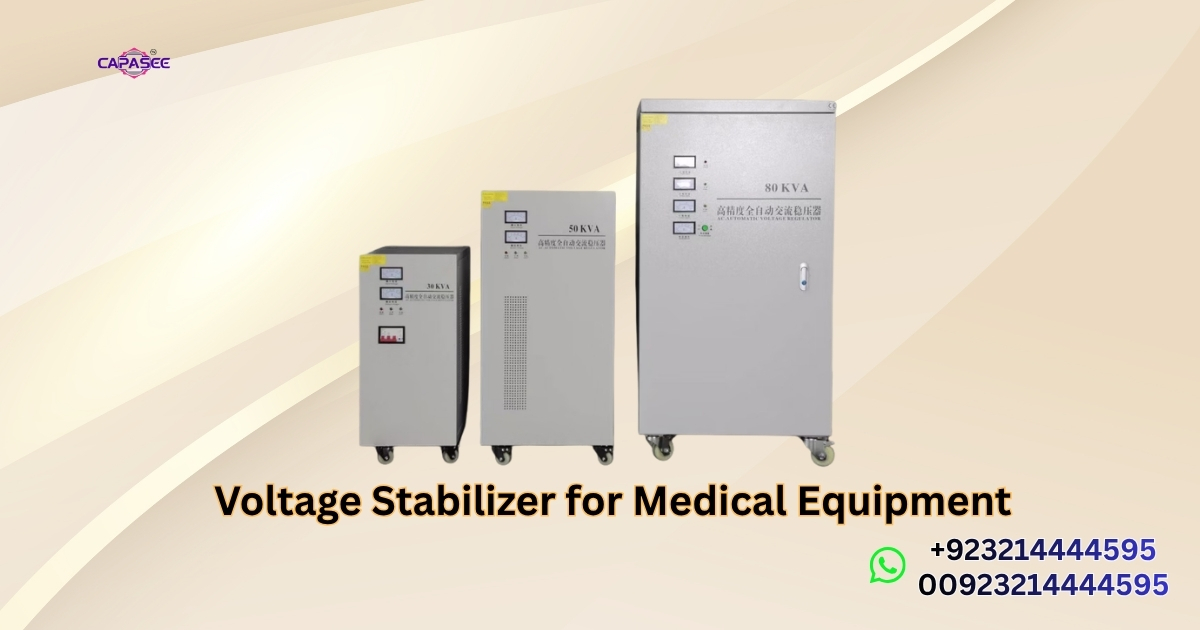
| 50 KVA and above | Large hospital or imaging unit | MRI, CT scan, ventilators, critical systems | Heavy duty performance, wide input range |
In addition to capacity, four characteristics are the most important in terms of hospital settings. To start with, seek a wide range of input voltage, preferably 110 V to 270 V, to ensure that the servo motor voltage stabilizer for hospital continues to operate even in the worst brownout scenarios. Second, verify that the accuracy of the output voltage is within the range of plus or minus 1%. Third, ensure that the unit has built in overload cutoff and short circuit protection; these cannot be compromised in medical loads. Fourth, always inquire whether the stabilizer has any bypass capability so that your team can maintain it without shutting down the linked equipment.
Check More & Purchase: Our Products
Servo Stabilizer Price, Installation, and Long Term Value for Pakistani Hospitals
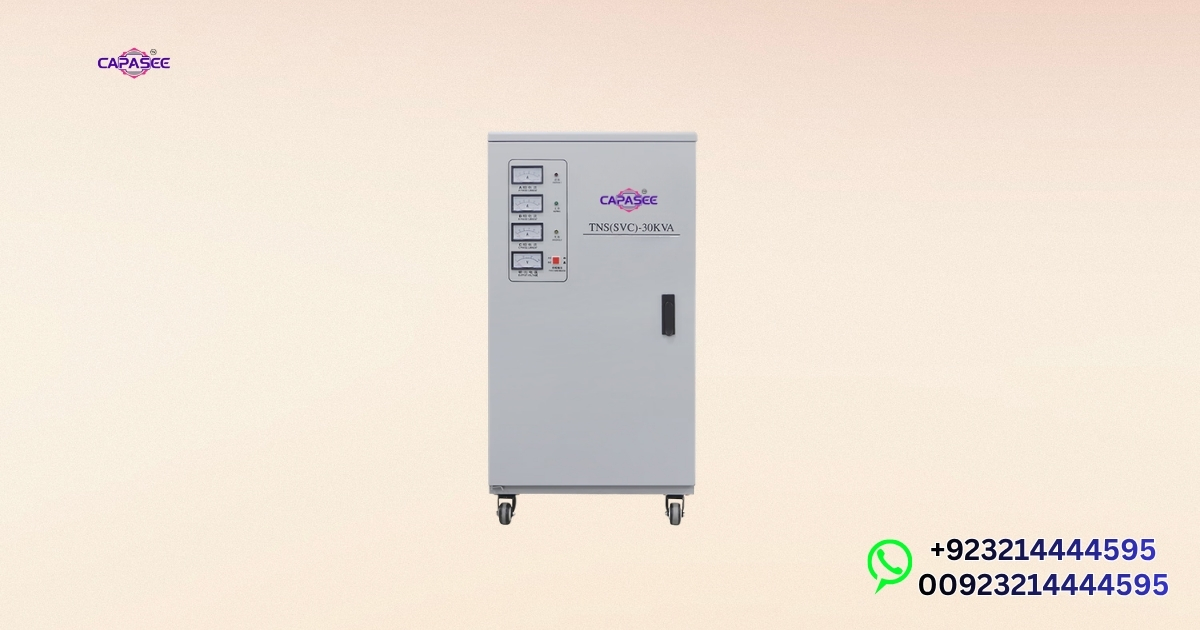
A servo motor voltage stabilizer for hospital in Pakistan typically costs between PKR 45,000 to power a 5 KVA unit, and PKR 800,000 or more to power a 100 KVA three phase system. The difference will be based on capacity, copper winding versus aluminum winding, brand reliability, and the single phase or three phase unit.
Capasee Electro Medical Engineering has transparent pricing with no hidden costs, and all units will be accompanied by a documented warranty. You can see the economic sense in investing in a good stabilizer; it is not only clinically prudent to invest in a good stabilizer, but it makes economic sense as well.
Installation Tips for Hospitals and Clinics
The stabilizer is as important as proper installation. Any properly sized unit, but put in the wrong place or wired, will not perform well, and may even void your warranty. The installation itself should always be done by a qualified electrical engineer. Capasee offers an on site installation service in the major cities of Karachi, Lahore, Islamabad, Multan, and Faisalabad.
Important installation instructions include; place the unit in a well ventilated, dry room free of direct sunlight; keep the lengths of input and output cables as short as practically possible to minimise line losses; ensure that the earthing connection is clean and solid. This is particularly important in hospital settings where patient safety regulations apply. Capasee engineers also conduct a full commissioning test following installation to ensure the output voltage is correct in actual conditions of the hospital load.
Maintenance, Warranty, and Long Term Performance
A servo motor voltage stabilizer for hospital will need little, though regular, maintenance. Cleaning of internal components, checking brush contact on the variac, checking all MCBs, and calibrating output voltage should be done by a qualified technician every 6 months. The most common cause of underperformance of the servo stabilizers after two to three years of operation is the neglect of this maintenance.
Capasee provides annual maintenance contracts (AMC) specifically designed to suit hospitals that come with scheduled servicing, priority emergency response, and calibration checks. All Capasee servo stabilizers include a one year parts and labor warranty (minimum), with longer warranty periods available at the point of purchase. Biomedical engineering teams in hospitals will always report that Capasee units have fewer interventions than imported units with the same capacity, a direct consequence of component quality and factory testing standards.
Frequently Asked Questions
What size servo motor voltage stabilizer is best for a hospital?
The right size is determined by your total load connected. The requirements of small clinics are 5 to 10 KVA, general wards span 15 to 30 KVA, and large hospitals making use of imaging or ICU equipment demand 50 KVA and above. Always include 25% buffer in order to avoid startup surges.
Is a servo stabilizer better than a normal voltage stabilizer for medical equipment?
Yes, a servo motor voltage stabilizer is much more suitable for a medical application. It provides continuous correction in plus or minus 1% accuracy, stepping without a relay, and settling on constant steps. In the case of sensitive equipment in hospitals, the smooth correction is the key difference.
Which medical departments need voltage stabilizers the most?
The top priority is radiology, ICU, operating theaters, and pathology labs. Such departments operate equipment such as MRI machines, ventilators, electrosurgical units, and analyzers, which are highly sensitive to changes in the voltage, and cannot afford a mid operation change in the voltage.
How much voltage fluctuation can a servo motor stabilizer handle?
A hospital grade servo motor voltage stabilizer for hospital typically has an input range of 110 V to 280 V and corrects it to a constant 220 V output. This encompasses almost all grid transient conditions that occur throughout Pakistan, such as extreme brownout periods during peak summer load periods.
What features should I check before buying a hospital voltage stabilizer in Pakistan?
Focus on the accuracy of output within the range of plus or minus 1%, a wide range of input 110 V-280 V, speed of correction (at least 10V per second), copper windings, bypass switch, and overload protection. All these features are standard in Capasee Electro Medical Engineering, hospital grade.
How often should a hospital stabilizer be serviced?
The suggested service interval in hospital settings is every six months. Checks to be undertaken on a regular basis ought to include variac brush contacts, MCB condition, internal cleaning, and output voltage calibration. Capasee has become a dedicated Annual Maintenance Contracts to hospitals, including priority emergency response and scheduled visits.
Conclusion
The stable power is not an engineering aspect in the hospital; it is a patient safety need. A good servo motor voltage stabilizer for hospital protects costly medical equipment, eliminates potentially dangerous mid procedure failures, and ultimately extends the working life of all equipment connected to it. In the grid environment of Pakistan, such protection is an aspect that no healthcare facility can afford to do without.
Use what you read here before you buy any other equipment, and upgrade the facilities. Capasee Electro Medical Engineering can be availed to help determine the precise load needs of your hospital and prescribe the appropriate solution without any commitment. Call us today and allow a team that has worked in the medical environment to assist you in getting the right call. In healthcare, reliable power is not an option, but rather the basis upon which all other things rest.