
Blog
Difference Between Standby and Online UPS for Hospitals

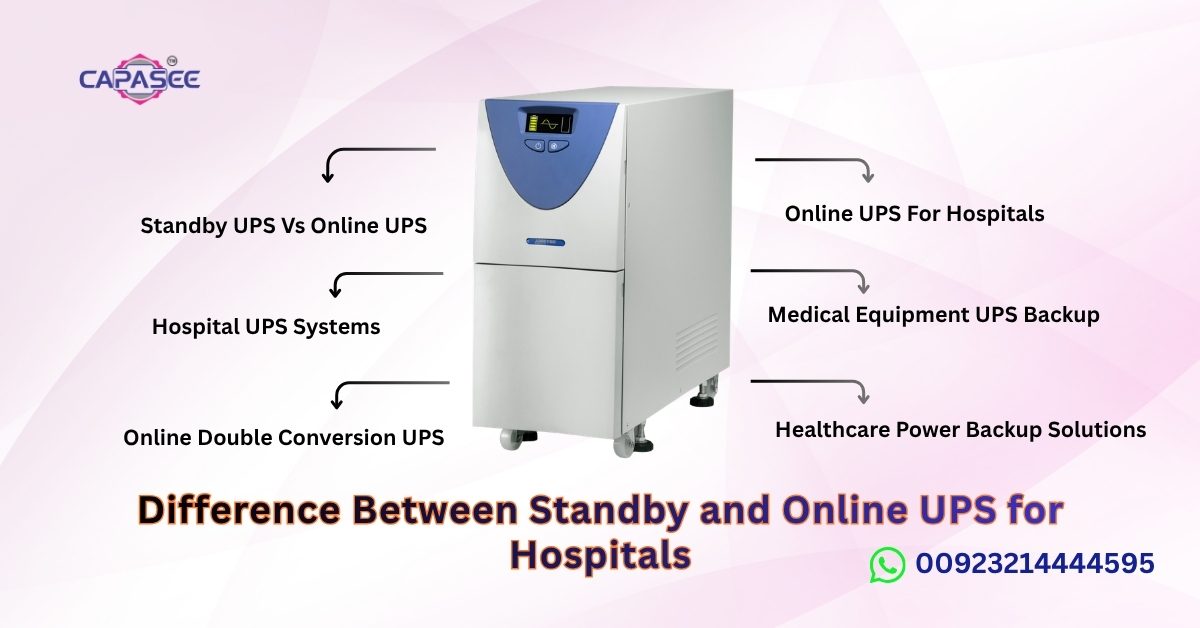
That one power outage in the operating room of a hospital could have killed someone is not an exaggeration; it has happened. However, many of the hospital administration and biomedical engineers in Pakistan are still opting for UPS on the basis of cost only, without comprehending the working mechanism of the device in the event of power failure. The difference between standby and online UPS for hospitals isn’t only a technical detail; it is the difference between a ventilator that continues to function and one that shuts off for 20 milliseconds.
This decision is critical for anyone living in Pakistan, especially in cities with frequent power outages, such as Karachi, Lahore, and Peshawar, where grid instability is a common occurrence. Capasee Electro Medical Engineering explains the two types of UPSs, their operation, their applications in hospitals, and the type of UPS your facility requires.
What Is a Standby UPS and What Is an Online UPS?
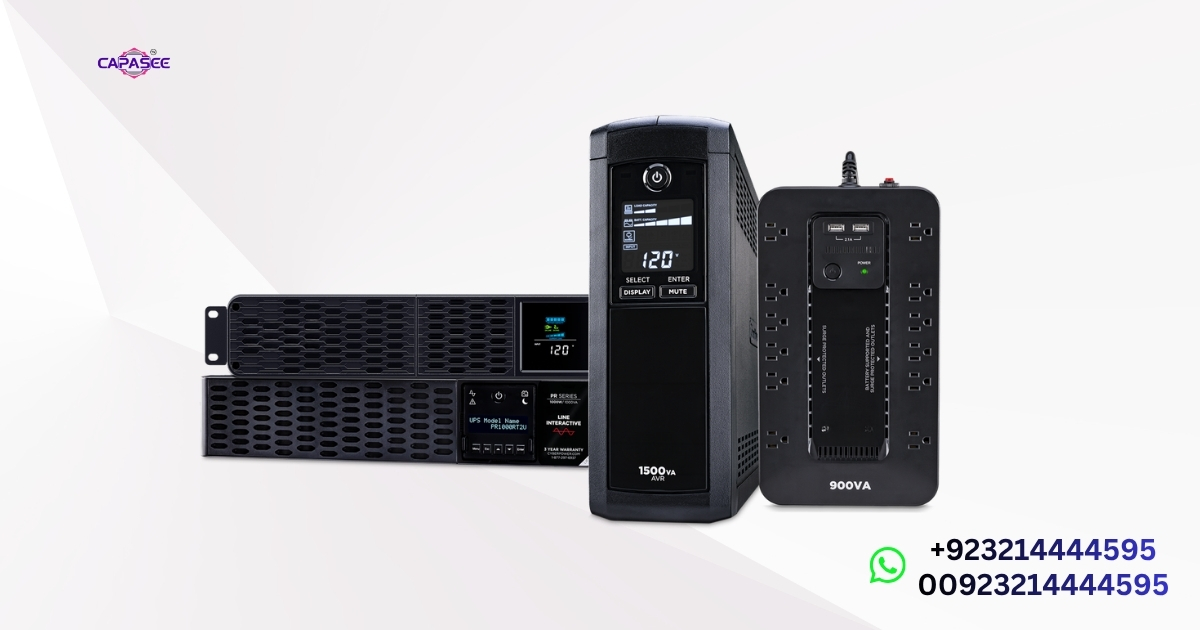
These are two very different technologies, not two expensive or inexpensive models. To make an informed decision when purchasing a hospital or clinic in Pakistan, it is crucial to have a solid understanding of their internal operations and the difference between standby and online UPS for hospitals.
Many purchasers take UPS systems for granted because they believe that they all perform the same functions. They do not. During normal modes of operation, the flow of power in each type is very different, as is the flow of power in the case of failure, and this difference impacts the performance of medical equipment and patient safety. Understanding the difference between standby and online UPS for hospitals helps prevent costly mistakes.
How Standby Offline UPS Works in Hospitals
A standby UPS (offline UPS) will connect your equipment directly to the mains power supply under normal conditions. Until a power failure is detected, the battery and inverter remain unused, and when a power failure occurs, the system automatically switches to battery power.
The switchover time for this switchover is typically 2 to 10 milliseconds, depending on the switcher’s model number. On a desktop computer, it’s not a significant delay. A clinical environment cannot tolerate a hospital ventilator resetting or sounding an alarm, and the same goes for an infusion pump. This is a major point in the difference between a standby and an online UPS for hospitals.
You May Also Read This Blog: Voltage Stabilizer for Medical Equipment
How Online (Double Conversion) UPS Works in Hospitals
A double conversion UPS (online UPS) operates in an entirely different manner. No direct connection to the main power supply. Rather, the incoming AC power is first rectified into DC and then reconverted into clean AC power by the inverter prior to reaching the devices.
This means the battery is permanently powered in the power path. In case there were a power outage, there would be no transfer time, as the inverter would already be operating. That’s why Capasee Electro Medical Engineering would recommend the Online UPS systems for surgeries, ICUs and hospitals where power quality and continuity cannot be compromised. This clearly demonstrates the difference between standby and online UPS for hospitals in critical care settings.
Key Differences Between Standby and Online UPS for Medical Facilities
Hospitals require a more in depth understanding of the difference between standby and online UPS for hospitals than the simple transfer time. It contains information on the quality of the conditioning of the incoming power by each system, the cost of operating each one over time, and which medical devices can be safely operated from each one.
It’s not only your electric bill that is impacted by making the wrong choice. The difference between standby and online UPS for hospitals impacts the clean, stable power that is provided to your critical equipment, second by second, day after day. Let’s compare the two systems on the most important factors in a hospital environment.
Transfer Time: Zero vs. 5ms and Why It Matters for Patients
Transfer time is the delay between the loss of mains power and the UPS switching to battery. A Standby UPS only takes about 5 milliseconds to sense the power loss and turn the inverter on. Online UPS does not have a transfer time, as there is no transfer switching. This transfer behaviour is a crucial difference between standby and online UPS for hospitals.
Five milliseconds is not that long. There are, however, many medical devices, such as cardiac monitors, ventilators and surgical lights, that are sensitive to interruptions of even microseconds. In 2022, a hospital audit was carried out in various private hospitals of Lahore, and it was found that standby UPS installations in sensitive departments were causing alarms and resets in the equipment. Converted to Online UPS units, and the problem was solved. Such findings reinforce the difference between standby and online UPS for hospitals in real world applications.
Power Quality, Efficiency, and Cost Comparison
The online UPS ensures clean AC sine waves are produced each cycle, making it an ideal power conditioning solution at all times. When operating normally, a standby UPS routes raw power straight onto your equipment and typically allows voltage spikes, harmonics and frequency variations to pass through to your equipment. This power quality factor highlights another difference between standby and online UPS for hospitals.
Cost is always a consideration for any hospital procurement team in Pakistan. While standby UPS systems cost less initially, online UPS offers lower overall equipment maintenance costs by shielding sensitive equipment from dirty power. Here is a side by side comparison outlined in the table below, helping explain the difference between standby and online UPS for hospitals:
Standby UPS vs. Online UPS: Complete Comparison Table. Standby UPS vs. Online UPS: Complete Comparison Table.
| Feature | Standby UPS | Online UPS |
| Transfer Time | ~5ms | 0ms |
| Power Conditioning | Basic | Full (double conversion) |
| Voltage Stability | Moderate | Perfect |
| Efficiency | Higher | Slightly Lower |
| Noise Level | Lower | Higher (cooling needed) |
| Cost | Lower | Higher |
| Best For | Non critical equipment | Life support and critical devices |
Which UPS Type Is Best for Hospitals in Pakistan?

In every zone of a hospital where direct patient care or life support equipment is involved, an online UPS is the only choice. It isn’t a preference. It is a clinical safety standard which is in accordance with international biomedical engineering guidelines, and hospitals in Pakistan are also increasingly following this standard. The difference between standby and online UPS for hospitals becomes critical when evaluating power protection requirements in patient care environments.
Although a standby UPS is still a viable solution for a hospital setting, they are the appropriate solution only for administrative and non clinical areas. It’s important for hospital procurement managers to comprehend this difference between standby and online UPS for hospitals and plan their spending wisely without sacrificing patient safety.
Check More & Purchase: Our Products
Why Online UPS Is Critical for Life Support Equipment
A common denominator for all ventilators, anesthesia machines, cardiac defibrillators and neonatal incubators is the need for continuous, clean power without any fluctuation. An online UPS does just that with its double conversion design, which protects your equipment from all of those events that happen in the grid, such as surges, sags, brownouts, and frequency fluctuations. This highlights the difference between standby and online UPS for hospitals where uninterrupted power is essential.
This is not a luxury in Pakistan, where load shedding, voltage instability and frequency deviation are a regular occurrence from the national grid. Considering the conditions in the local grid, it is found that passive power protection is totally unsuitable for life critical applications, which is the reason online UPS systems have been installed in ICUs, cardiac care units and operating theatres in Punjab & Sindh. The difference between standby and online UPS for hospitals is especially evident in these critical care settings.
When Standby UPS Is Acceptable for Hospital Use
Not all rooms in a hospital need online UPS protection. A standby UPS is a safe power solution for administrative offices, billing counters, medical records workstations, and general purpose printers. In these areas, power needs are the same as in a typical office, demonstrating the practical difference between standby and online UPS for hospitals based on application requirements.
A hybrid solution can be applied in hospitals with limited budgets, a combination of online UPS (with back ups) in the intensive care units (ICU), operating theatres (OT), neonatal intensive care units (NICU), and emergency departments with cost effective standby UPS units in human resources (HR) offices, reception, and staff lounges. This approach ensures patient safety and is a responsible approach to capital expenditure. Understanding the difference between standby and online UPS for hospitals helps facilities implement this balanced strategy effectively.
Frequently Asked Questions
What is the difference between UPS standby and UPS online?
A standby UPS configures a battery backup when it senses a loss of power, adding a 2 to 10 ms delay. An online UPS constantly passes through the inverter, providing a no break transfer time and completely conditioned power at all times.
Which UPS is better, online or offline?
Online UPS is better for critical applications. It offers no transfer delay, optimum voltage stability and absolute protection from grid fluctuations. Capasee Electro Medical Engineering suggests the installation of online UPS in all patient care and life support areas of hospitals in Pakistan.
What is the main disadvantage of an offline standby UPS?
The biggest drawback is the transfer delay. A standby UPS will switch to power upon a power loss in 2 to 10 milliseconds. The short time interval could result in resetting or alarms on sensitive medical equipment, which is not safe for critical hospital departments.
What are the three types of UPS?
There are three types; standby (offline) UPS, line interactive UPS, and online (double conversion) UPS. There are different levels of protection. An online UPS is the best one when it comes to the quality of power for health care centres and hospitals in the country of Pakistan.
What is a standby UPS?
A standby UPS is a simple standby power device that operates equipment directly from the grid during normal times. It only turns to battery in case of failure, which is appropriate for only non critical and administrative hospital equipment.
What is an online UPS system?
Double conversion technology converts the input AC power to DC power and then back to clean AC power without stopping, all in the background and before reaching your equipment. This process provides a completely stable and uninterrupted power supply, without drop out or transfer time in case of a power failure.
Which type of UPS is better?
From a hospital perspective, it is an easy choice to make. Online UPS is the better option. It provides no transfer delay, all power conditioning, and total grid isolation. Knowing the difference between standby and online UPS for hospitals will help in making safe and smart power choices for Pakistani healthcare facilities.
Conclusion
The right UPS choice in a hospital isn’t a simple cost cutting choice. It’s a matter of understanding that Online UPS will keep your patients safe and secure, as well as your equipment; Standby UPS is much more limited in scope, having a function that is not meant for a clinical application. When you know the difference between standby and online UPS for hospitals, your ICU, OT and emergency departments remain powered through every national grid failure; Pakistan waves at them.
Whether you need a UPS upgrade and/or a new healthcare facility, do not hesitate to reach out to Capasee Electro Medical Engineering today. Our biomedical engineers will evaluate the electrical needs of your facility and determine which is best for each department by assessing the difference between standby and online UPS for hospitals according to operational demands.