




Blog
Stabilizer for ICU Equipment

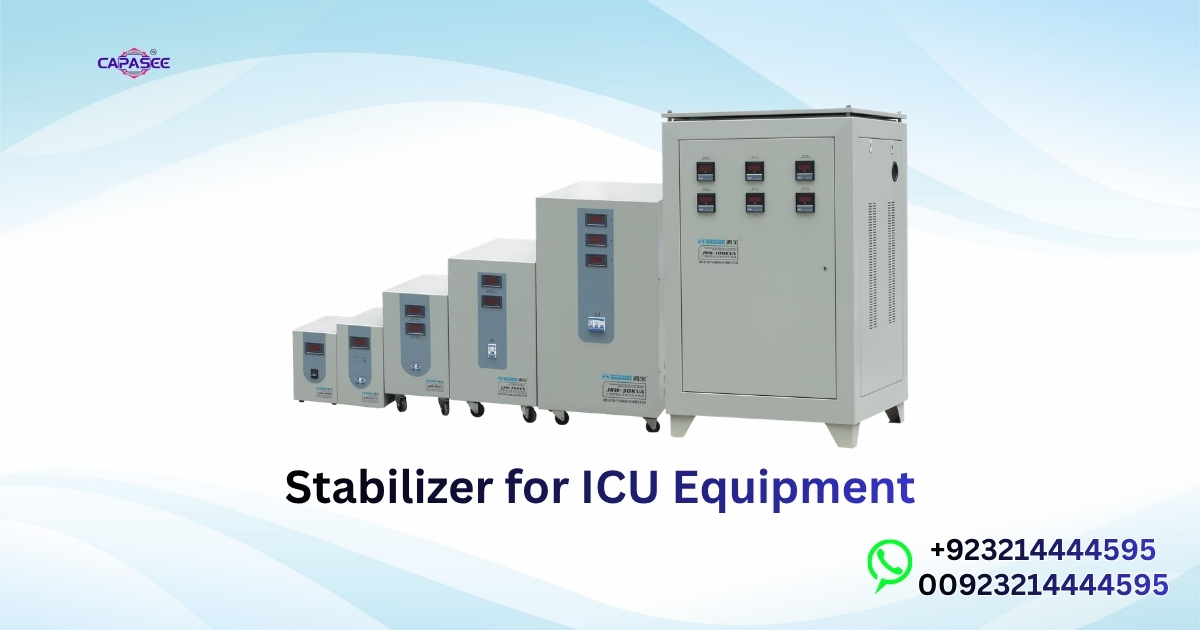
The one time a voltage fluctuation happens to an ICU ventilator (millions of rupees) is not just a loss to the finances, but a loss to patients’ safety in a critical care unit. But in hundreds of hospitals in Pakistan, life saving equipment operates without adequate power protection daily. This is an area that you don’t want to overlook if you manage, own, or maintain ICU equipment.
A stabilizer for ICU equipment is not an optional infrastructure; it’s the first line of defense between your machines and the notoriously unstable power supply of Pakistan. Here are the details of these stabilizers, the inadequacies of the domestic and commercial units in clinical settings, and how Capasee Electro Medical Engineering assists healthcare facilities in Pakistan in selecting and implementing the perfect stabilizer for their facility.
Why a Stabilizer for ICU Equipment Is Essential for Modern Hospitals in Pakistan
The power grid in Pakistan is one of the most erratic in South Asia. In cities like Lahore, Karachi, Faisalabad, and Multan, hospitals face daily challenges of voltage fluctuations, sudden load shedding, and irregular supply. Failure to get the right power protection can cause silent damage to ICU equipment that will lead to a reduced machine life and cost a lot more for maintenance.
A dedicated stabilizer for ICU equipment specifically designed for ICU equipment is a protective barrier that prevents the clinical equipment from coming into contact with the incoming power supply. It maintains voltage within safe operating parameters, prevents sudden voltage rises from reaching sensitive electronic parts, and protects your machines from inadequate performance at any moment.
How Voltage Fluctuations Damage ICU Machines and Critical Care Devices
Not all voltage fluctuations are obvious and harmful. Typically, they generate micro stress within the internal circuits of ventilators, patient monitors, and infusion pumps. This stress continues to build and works up to the failure of components over weeks or even months.
An instance cited by the government hospital in Punjab, which reported repeated failure of its ventilator control boards. Consistent incoming voltage (between 140V and 270V) was discovered to be the root cause after investigation. After the installation of a medical quality stabilizer for ICU equipment, there were no more failures. This is a situation that is seen in dozens of hospitals in Pakistan every year.
Benefits of Installing a High Quality ICU Equipment Stabilizer in Pakistani Hospitals
A voltage stabiliser for the medical (ICU) environment does more than protect equipment; it can bring tangible benefits to your unit. It prolongs the life of costly equipment, minimizes unnecessary shutdowns, and eliminates one of the largest technical threats to your critical care process.
From a financial standpoint, the expense of a quality stabilizer is much less than the cost of repairs and replacements in hospitals. More significantly, consistent power provides your clinical staff with the capacity to concentrate on patient care without being concerned about equipment acting in unanticipated ways during crises.
You May Also Read This Blog: Online UPS Pakistan
Best Stabilizer for ICU Equipment: Features, Specifications and Buying Guide
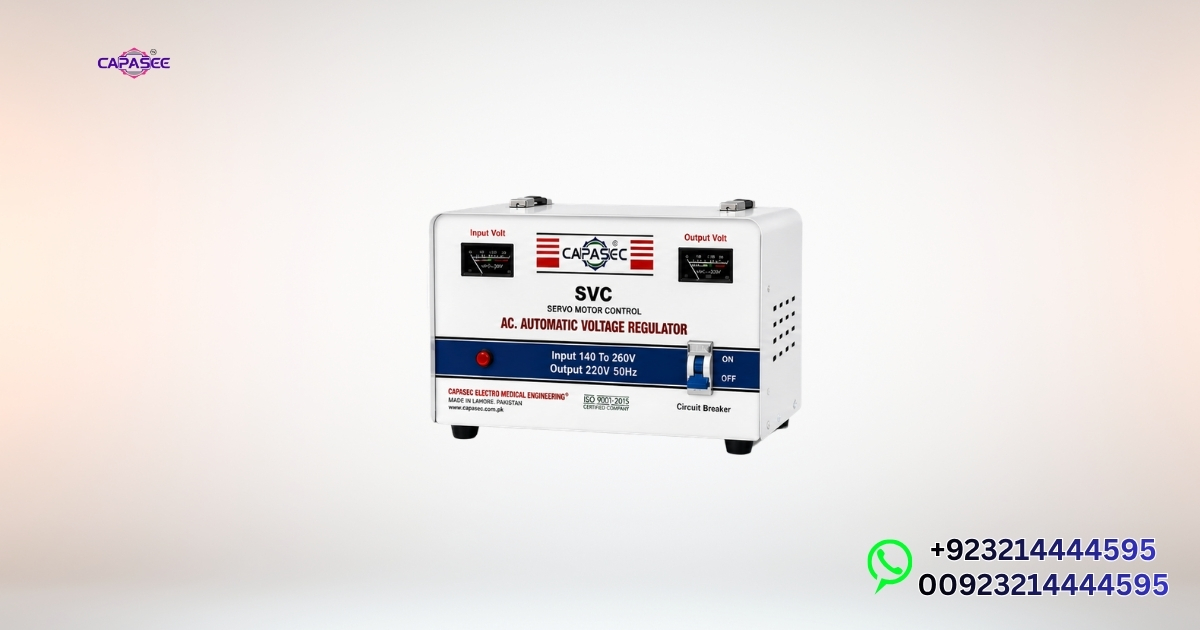
It’s not the cheapest option, but that’s the right ICU stabilizer. It entails knowledge of those technical features that directly affect medical grade equipment and an understanding of how to match those features to the power conditions in your facility. It is as dangerous as not having protection at all when done incorrectly.
Hospitals should perform testing before buying to check stabilizer capacity, correction speed, noise filtration, and voltage range. All these can directly influence the unit’s performance in actual clinical situations prevailing in Pakistan’s power environment.
Key Features to Look for in an ICU Voltage Stabilizer for Medical Equipment
Power problems are not an option in medical facilities. The stabilizer for ICU equipment used for the purpose should be of higher quality than that used in the commercial and industrial fields. Here are the four most important aspects to consider when buying.
Servo Motor Technology
Servo motor stabilizers are the most appropriate stabilizers for sensitive ICU machines as it has a continuous and stepless voltage correction. Servo based units adjust smoothly and accurately, eliminating the possibility of micro voltage jumps that can affect monitor readings and infusion pump calibration, unlike relay based units that adjust in fixed steps.
Over Voltage and Under Voltage Protection
A good stabiliser should automatically disconnect the power supply if the voltage that is provided is too low or too high. The feature helps safeguard equipment from abrupt changes in the electricity grid, especially when Pakistan’s national grid experiences load shedding periods.
Noise Filtration for Sensitive ICU Machines
Power line electrical noise can cause an inaccurate reading on patient monitors and diagnostic equipment. This noise is filtered out before reaching your equipment by a stabilizer for ICU equipment that already has EMI and RFI protection built in, so there’s no need for false alarms on critical monitoring systems or inaccurate readings.
Fast Voltage Correction Response Time
Response time is the ability of the stabilizer to respond to an incoming voltage change. The recommended correction time for ICU equipment is 20 milliseconds or less. Slower units can cause a harmful spike to reach the unit before it can be corrected, thus counteracting the entire purpose of using a harmonic.
ICU Equipment Stabilizer Capacity Guide for Pakistani Hospitals
It is critical to match the stabilizer capacity with the type of equipment. For hospital biomedical engineers and biomedical procurement staff, the table below serves as a helpful reference guide:
| ICU Equipment Type | Recommended Stabilizer Capacity | Ideal Voltage Range | Best Use Case in Pakistan |
| Ventilator Machines | 3 KVA to 5 KVA | 160V to 260V | ICU and Emergency Wards |
| Patient Monitors | 1 KVA to 2 KVA | 170V to 250V | Continuous Monitoring |
| Infusion Pumps | 1 KVA | 180V to 240V | Critical Medication Delivery |
| ICU Beds and Monitoring Systems | 5 KVA to 10 KVA | 150V to 260V | Multi Equipment Support |
| Diagnostic ICU Equipment | 10 KVA and above | 140V to 280V | Large Hospitals and Labs |
Conveniently compares the load of the various pieces of equipment against facility size, making informed procurement decisions, not guesswork, based on both.
Choosing the Right Stabilizer for ICU Equipment from Capasee Electro Medical Engineering
Not all stabilizer suppliers are aware of the special requirements of a clinical setting. Capasee Electro Medical Engineering was designed to meet the power requirements of healthcare institutes throughout Pakistan to provide medical grade power products and stabilizers for ICU equipment solutions. You can appreciate the difference between a general electrical supplier and a specialist medical engineering company the moment something goes wrong at 2 am in a critical care unit.
Capasee collaborates directly with hospital biomedical teams, procurement, and hospital managers to evaluate power conditions, specify the appropriate capacity, and install the power correctly with the right stabilizer for ICU equipment. This end to end solution removes the trial and error associated with getting it wrong with wrong purchases and failed installations.
Why Hospitals in Pakistan Trust Capasee Electro Medical Engineering for ICU Power Solutions
Capasee Electro Medical Engineering has established its reputation on two things. Product quality and post sale technical assistance. After installation, the hospitals that have experienced Capasee report quicker problem resolution, extended equipment lifespan, and fewer call outs for power issues with every stabilizer for ICU equipment installation.
Capasee uniqueness is not only in the product line but also in the technical expertise of all recommendations. They know the characteristics of various ICU machines and have solutions to match the hospital’s clinical needs instead of specifications for stabilizers for ICU equipment systems.
Custom ICU Stabilizer Solutions for Ventilators, Monitors and Medical Devices
Capasee is able to provide custom configurations based on the hospital’s required stabiliser configuration, where the hospital operates several ICU devices on a common power circuit. Instead of installing individual protection systems for each machine, Capasee can deploy a centralized protection system to protect a whole ward with one deployment using a stabilizer for ICU equipment setup.
It is particularly beneficial for hospitals in Lahore, Rawalpindi, Peshawar, and Quetta that are newly constructed or newly expanded, and for the cities still developing their power infrastructure and load management with a dependable stabilizer for ICU equipment support.
Check More & Purchase: Our Products
Common ICU Power Problems and How Medical Stabilizers Solve Them
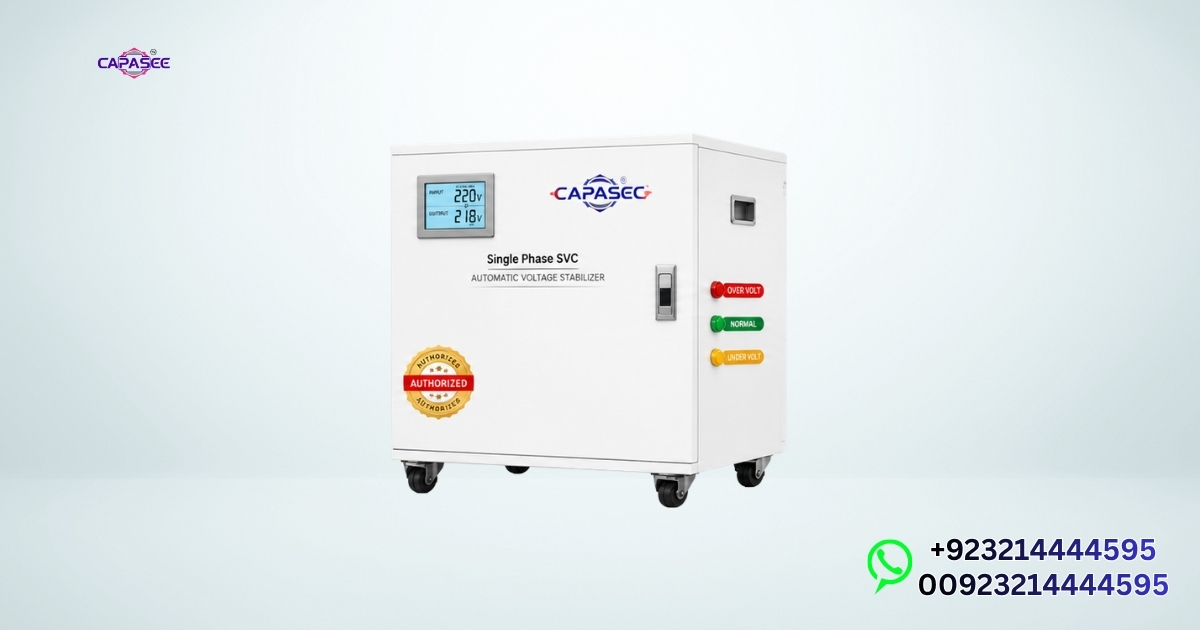
In Pakistan, power issues in hospitals are more than just load shedding. Hospitals experience multiple types of voltage sags, surges, harmonic distortion, and neutral conductor faults, which all impact the performance of equipment in the ICU differently. A good grasp of these issues enables facility managers to justify investing in adequate power protection and stabilizer for ICU equipment solutions to hospital management.
For each power problem, there is a direct technical solution, and most of these are solved at the point of entry before harmful current has the opportunity to reach clinical equipment by using an automatic voltage stabilizer and stabilizer for ICU equipment.
Frequent Power Issues in Pakistani Hospitals and Their Impact on ICU Equipment
Undervoltage is the most common power problem reported by Pakistani hospital ICUs, which usually occurs during peak demand time, usually from 6 PM to 10 PM. At those times, the grid supply is reduced, and equipment will shut down or run beyond their ratings. Ventilators operating at a low voltage result in varying airflow pressure, a direct concern for patient safety, and the need for a reliable stabilizer for ICU equipment.
The second problem is transient voltage surges as large equipment, such as air conditioners or elevators, is powered on in the same building circuit. These spikes may add milliseconds, but affect the memory and calibration data within digital ICU devices protected by a stabilizer for ICU equipment.
How Automatic Voltage Stabilizers Improve Patient Safety and Equipment Lifespan
The automatic voltage stabilizer not only safeguards hardware. It provides a stable power supply for the operation of ICU equipment that performs in exactly the way the manufacturer designed, thereby directly enhancing clinical reliability. If the ventilator is powered with clean, consistent power, the alarm thresholds will be correct, and the delivery of breath will be within set parameters with a proper stabilizer for ICU equipment.
Stable equipment means that there is much less internal wear on equipment from a life span point of view. Some Capasee customers report having their ICU machines in service for much longer than normal service life due to the elimination of power related stress. That added life means that those hospitals with limited budgets in Pakistan will be spending less on capital equipment in the long term, with an effective stabilizer for ICU equipment.
Frequently Asked Questions
What is the best stabilizer for ICU equipment in Pakistan?
In Pakistan, the best automatic voltage stabilizer is a servo motor type automatic voltage stabilizer that is capable of filtering out the EMI and has a fast response time when making corrections. The capacity should be equal to the capacity of your device, usually 3 KVA to 10 KVA. Capasee Electro Medical Engineering offers options for medical use according to the power conditions in Pakistani hospitals.
Why do hospitals need voltage stabilizers for ICU machines?
Every day, Pakistani hospitals suffer from voltage fluctuations, surges, and load shedding, which affect the sensitive devices in the hospitals’ ICUs over time. A stabilizer for ICU equipment ensures that incoming electricity is within safe limits, safeguarding vital machines such as ventilators, monitors, and infusion pumps from electrical stress and early failure.
Which ICU equipment requires a separate stabilizer?
Dedicated power protection is needed for ventilators, patient monitors, infusion pumps, and diagnostic devices. Centralized stabilizer configurations work well for high load systems such as multi bed ICU setups. The capacity requirement of each device is different, and it is very important to match the appropriate KVA rating with each machine.
What size stabilizer is recommended for ventilators and patient monitors?
A 3 KVA to 5 KVA stabilizer is normally used for ventilators, and a 1 KVA to 2 KVA stabilizer works well with patient monitors. When calculating capacity for startup currents and future additions, always use a 20 percent overload above the equipment rating.
How much does an ICU equipment stabilizer cost in Pakistan?
The pricing range is dependent on the capacity and features. The price of entry level medical stabilizers begins at PKR 15,000, and for full ICU wards, there could be a wide variation. Capasee provides choices in various budget ranges and has clear pricing for hospital purchasing departments.
Can a voltage stabilizer protect ICU machines during load shedding?
A stabiliser is not a source of backup power when experiencing load shedding. It guards equipment from voltage changes that occur when the power comes back on, so it’s most vulnerable to damaging voltage peaks. A stabilizer will work with a UPS or generator system for full load shedding protection.
Where can hospitals buy reliable ICU stabilizers in Pakistan?
Medical Grade Stabilizers are available in Pakistan and can be bought directly from Capasee Electro Medical Engineering. Capasee provides supply, installation, and after sales technical support, all in one package, for healthcare facilities in Lahore, Karachi, Rawalpindi, Faisalabad, Multan, and more.
Why choose Capasee Electro Medical Engineering for ICU stabilizers?
Capasee Electro Medical Engineering focuses on power solutions for a clinical environment. They bring biomedical expertise and a solid grasp of electrical engineering to provide a solution that fits the hospital’s specific size and installation needs, instead of just an off the shelf product, and with constant technical support.
Conclusion
It is not a luxury choice to take to protect your ICU equipment from Pakistan’s unstable power supply; it is a clinical responsibility. The right stabiliser for ICU equipment helps to lengthen machine life, minimise expensive repairs, and most importantly, ensures critical care equipment is reliable when needed the most.
Taking the right power protection approach today will lead to reduced equipment downtime, reduced maintenance costs, and a safer tomorrow for patients and clinical personnel with the right stabilizer for ICU equipment.Call Capasee Electro Medical Engineering and talk about your hospital’s unique power needs and request a solution that’s right for your facility, your equipment, and your budget. Your ICU will need power protection that actually works.