
Blog
Hospital Power Backup

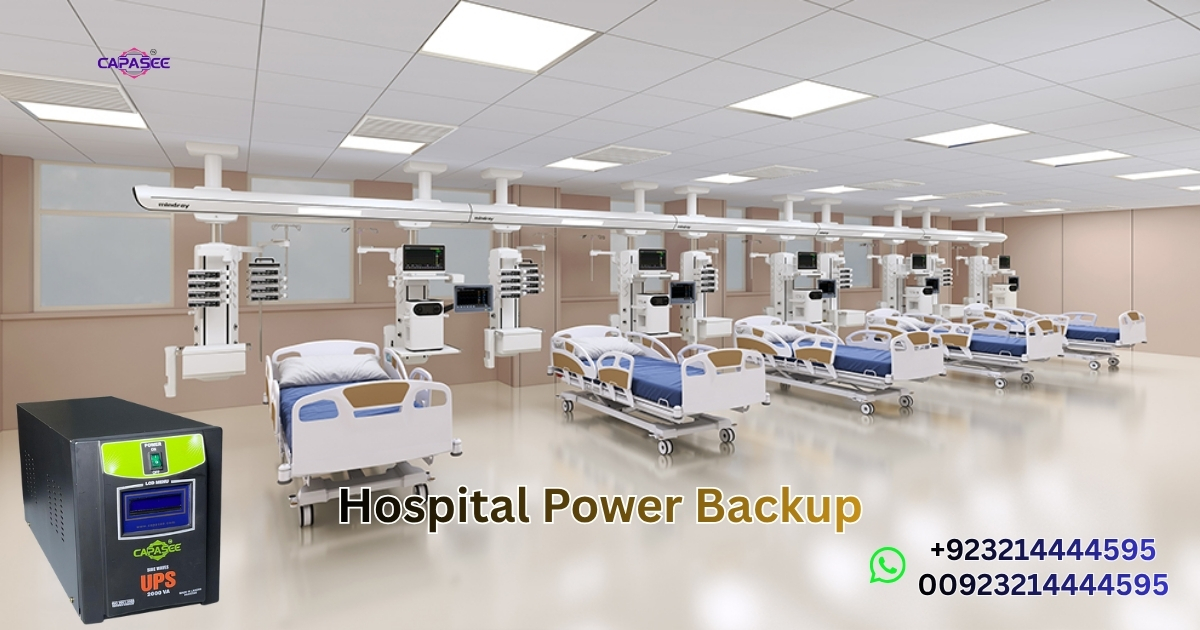
Each minute without electricity in a hospital is a minute when someone’s life is on the line. The entire power chain of critical care relies on one thing, a reliable hospital power backup system. Whether it’s ventilators or operation theatre lighting, the entire power chain of critical care relies on one thing, a reliable hospital power backup system. But hundreds of hospitals and clinics still function without a proper backup plan in place across Pakistan, putting patients at risk of the ravages of load shedding and the abrupt loss of electricity.
Pakistan’s energy sector is unstable and unpredictable, and for the healthcare sector, this is far from acceptable. From a small clinic in Lahore to a large tertiary care hospital in Karachi, there is no denying that proper hospital power backup is a life safety need, not a luxury.
In this guide, you will learn what exactly is meant by hospital power backup, what systems can be used in Pakistani conditions, and how Capasee Electro Medical Engineering can help power healthcare facilities during a power backup.
Why Hospital Power Backup Is Critical for Medical Facilities in Pakistan
Power is not a luxury in the hospital; it’s a fundamental necessity of all clinical decisions taken within the hospital walls. In the event of a power outage, monitors go dark, surgical lights go out, and life support equipment fails. For Pakistani hospitals that are often subjected to load shedding, with periods of 8 to 12 hours a day in smaller towns and cities, a reliable hospital power backup is the key to a functioning hospital and averting a crisis.
The healthcare industry in Pakistan has suffered from the impact of Pakistan’s national grid failures to meet demand over the years. In a 2023 report made by the Pakistan Medical Association, it was revealed that underfunded district hospitals faced power related equipment failure, resulting in avoidable complications. Capasee Electro Medical Engineering has dealt with dozens of such facilities, and the common denominator is always the same, facilities that invested early in a structured hospital power backup system experienced no equipment downtime during outages.
Risks of Power Outages for Patient Care and Medical Equipment
Most administrators are not aware of the immediate clinical risk during unplanned outages until a time of emergency. In ICUs, ventilator dependent patients are at the highest risk, but even non ICU departments are affected; medicines in the fridge are no longer suitable, infusion pumps are left without medication and diagnostic imaging machines need expensive recalibration following sudden shutdowns. A dependable hospital power backup system helps reduce these risks.
In addition to patient safety, healthcare equipment quickly deteriorates when the power supply is unstable. Restoration can result in voltage spikes that can have a greater impact than the actual outage. A single fluctuation of the grid can cause damage to equipment that costs millions of rupees without a proper hospital power backup and stabilization layer.
Minimum Power Backup Requirements for Hospitals by Pakistan Standards
All the healthcare facilities in Pakistan have to identify critical equipment, its tolerance to voltage failure and backup time. The table below represents the minimum standards accepted by Capasee Electro Medical Engineering with regard to the design of a hospital power backup system in hospitals throughout Pakistan.
| Equipment Type | Power Backup Needed | Voltage Stability Required |
| Phototherapy Lights | 2 to 4 hours continuous | Plus or minus 5% (Voltage Stabilizer) |
| UPS Systems for ICU | 6 to 8 hours minimum | Plus or minus 3% |
| Ventilators and Ventilator Systems | 4 to 6 hours backup | Plus or minus 5% |
| Nebulizers | 2 to 3 hours | Plus or minus 10% |
| Laparoscopic Instruments | 3 to 4 hours | Plus or minus 5% |
The numbers are in accordance with the standards given by the Pakistan Engineering Council and international healthcare facilities. When assessing the hospital power backup requirement of a hospital, Capasee takes this as a starting point.
Best Hospital Power Backup Solutions: UPS Systems and Voltage Stabilizers
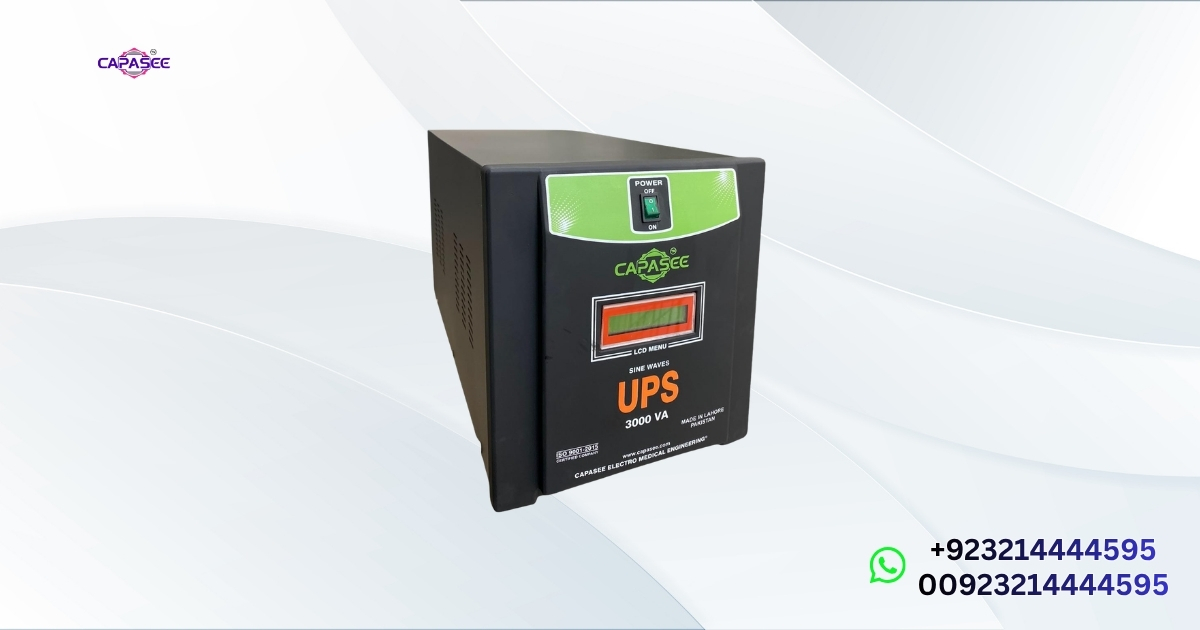
The two essential components of a good hospital power backup strategy for hospitals are UPS systems and voltage stabilizers. UPS units are used to switch on or off power instantly so that no matter how critical the device is, it will not be interrupted even for a millisecond, and voltage stabilizers will prevent the start up of sensitive medical electronics from the unpredictable power supply in Pakistan. Together they create an entire protection over any healthcare facility.
Capasee Electro Medical Engineering is designing combined UPS and stabiliser solutions fitted to the Pakistani power scenario, with frequent outages and fluctuations. A properly designed hospital power backup system can not only light the way but also ensure the use of costly imported medical equipment lasts longer.
You May Also Read This Blog: Best Online UPS for Medical Laboratory Equipment
How to Choose UPS Systems for Hospital Emergency Power
The UPS system selection process for a hospital is different from that of an office. The UPS for medical applications should provide online double conversion technology, which ensures that the load connected to the UPS always works on a clean, regulated power from the battery, not directly from the mains. This prevents both surges and sags and also removes the need for transfer time.
Capasee Electro Medical Engineering evaluates a hospital’s location and determines the total connected load of all departments that would be critical to the hospital and then sizes the UPS with a 25% to 30% overhead. This will provide a buffer for additional equipment additions and allow the system to never operate at full load, keeping battery life much longer within a hospital power backup setup.
Voltage Stabilizers for Medical Equipment: Protecting Against Power Fluctuations
In fact, voltage fluctuation poses a serious threat to Pakistani hospitals more than outages, which can be a serious issue every day. Machines such as C arms, anaesthesia machines and digital X-rays are only allowed to run within very narrow voltage tolerances. Input voltage deviations as small as 10 to 15 per cent from the rated range may cause internal fault codes and/or burn out sensitive circuit boards or corrupt the calibration data.
Capasee provides automatic voltage regulators with servo control, which are specially designed for medical applications. Servo units deliver continuous voltage correction, with a response time of less than 20 milliseconds, and, unlike relay based stabilizers available in the general market, are able to correct voltage in real time and are ideal for equipment that responds immediately to voltage changes in the supply. These systems strengthen overall hospital power backup performance.
Hospital Power Backup Maintenance and Cost in Pakistan Market
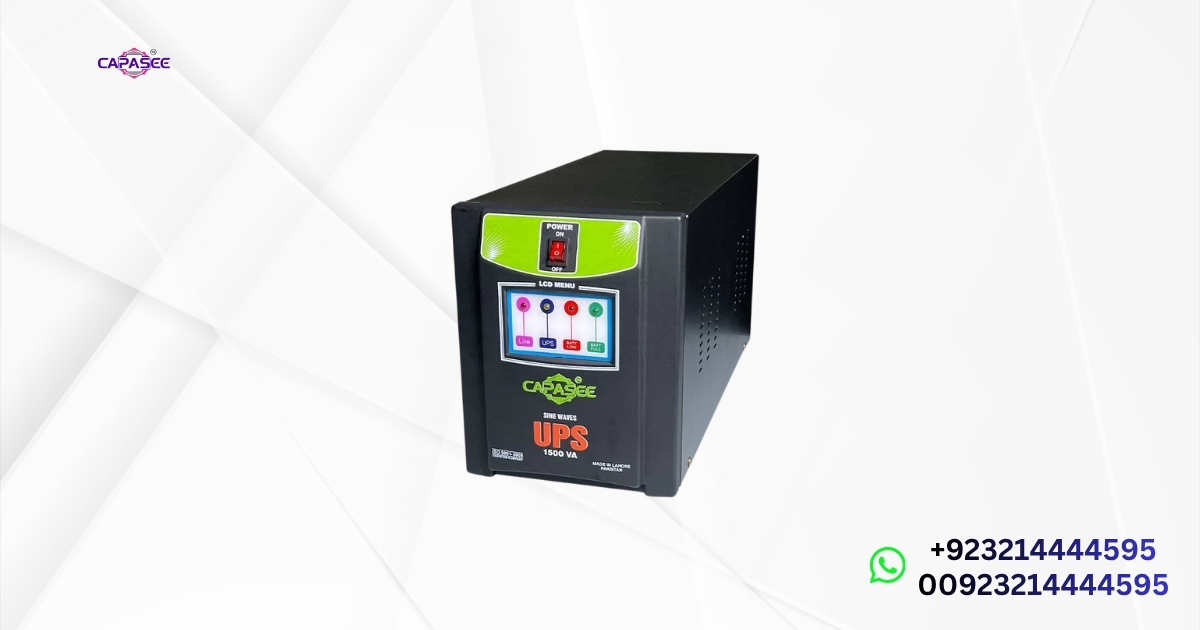
If a hospital’s power backup system isn’t as reliable as the maintenance schedule that is used behind it, it isn’t reliable at all. While many facilities in Pakistan have purchased good UPS and stabiliser installations, they do not give them quarterly services; as a result of this, the batteries lose capacity, the terminals get corroded, and the switchovers fail just when they are required. Preventive maintenance is not an extra cost; it is an investment made to make the investment worthwhile.
Capasee Electro Medical Engineering provides hospital clients with annual structured maintenance contracts throughout Pakistan. These contracts encompass battery load tests, firmware testing of smart UPS units, and physical assessments of all power distribution points that are linked to the hospital power backup system.
Check More & Purchase: Our Products
Regular Maintenance Checklist for Hospital UPS and Backup Systems
Hospital backup power maintenance should include at least the following on an ongoing basis, every 3 months:
First of all, test the battery backup time with a full load (simulated full load). Without active management, battery capacity declines about 20 per cent per year, and this test can show if it is getting close to the time for replacement. Second, check all terminals and cables for oxidation, which creates resistance and heat. Thirdly, test the automatic transfer switch response time to ensure that the system can switch within acceptable parameters for life critical equipment. Fourth, check for firmware updates from the manufacturer and update UPS firmware if any stability patches have been released. Finally, record all readings and compare them to the baseline taken at installation.
Capasee Electro Medical Engineering supplies trained biomedical engineers for these types of checks so that the technician conducting the inspection is aware of the electrical and clinical environment of the equipment to be protected under the hospital power backup infrastructure.
Hospital Power Backup Cost in Pakistan: Price Comparison 2026
The cost of hospital power backup in a hospital in Pakistan is determined by considering various factors, such as the size of the hospital power backup system, the type of equipment being powered, and the complexity of the installation. The following table provides realistic market ranges for common configurations.
| System Type | Capacity Range | Estimated Cost (PKR) | Best Suited For |
| Single phase UPS (Medical Grade) | 1 kVA to 3 kVA | 45,000 to 120,000 | Small clinics, GP rooms |
| Three phase Online UPS | 10 kVA to 30 kVA | 350,000 to 900,000 | Medium hospitals, ICUs |
| Servo Voltage Stabilizer | 5 kVA to 50 kVA | 80,000 to 450,000 | All departments with sensitive equipment |
| Integrated UPS plus Stabilizer System | 20 kVA to 100 kVA | 700,000 to 2,500,000 | Large hospitals, full facility backup |
| Generator plus UPS Hybrid Setup | Custom sizing | 1,200,000 and above | Tertiary care, 24/7 critical facilities |
The above figures are taken based on the existing prices of the supply chain from Capasee Electro Medical Engineering in Lahore, Karachi, Islamabad, and Faisalabad for hospital power backup projects. The price will depend on the level of the brand, installation complexity, and whether the facility requires a turnkey solution or only the upgrade of the components.
FAQ’s
What are the 5 C’s in a hospital?
The 5 C’s are care, compassion, competence, communication, and commitment. The five principles are used to guide every department at the hospital regarding the quality of patient service and professional behaviour.
What is code 9 in a hospital?
The hospital wide security threat, or lockdown, will be indicated by Code 9. Staff adheres to rigorous procedures to ensure the protection of patients, visitors, and staff while the risk is being addressed until its resolution.
What is UPS in a hospital?
UPS is short for Uninterruptible Power Supply. It provides immediate backup power in case of a power outage, safeguarding vital medical devices such as ventilators, ICU monitors, infusion pumps, etc.
What is the best power backup system for hospitals in Pakistan?
A double conversion UPS, along with a Capasee Electro Medical Engineering servo voltage stabilizer is the best power backup solution for hospitals in Pakistan that are facing frequent load shedding and an unstable electric grid.
How many hours of power backup do hospitals need in Pakistan?
ICUs must have a minimum of 6 to 8 hours. 2 to 4 hours are needed in general wards. The longest backup duration possible is required to be maintained in critical care areas.
What UPS capacity is required for hospital ICU power backup?
The required three phase online UPS capacity for a hospital ICU is 10 to 30 kVA, which is based upon the number of devices per bed at each ICU station times the number of active stations.
How much does a hospital power backup system cost in Pakistan 2026?
The cost of the units can vary from PKR 45,000 per unit, for small clinic units, to PKR 2,500,000 or more, for a full hospital integrated UPS & stabilizer system.
Final Thoughts
Installing hospital power backup is not a “set it and forget it” type of investment. It’s an investment that is structured around patient safety, equipment durability, and continuous clinical function. It is a fact that during critical power outages, properly sized UPS and servo voltage stabilizers combined, used at Pakistani healthcare facilities, outperform those with either inadequate or poorly maintained UPS or voltage stabilizers.
Use the information in this article and initiate your purchase with a proper load assessment first. You don’t have to guess about the capacity and compatibility of products in hospitals and clinics in Pakistan, as Capasee Electro Medical Engineering provides free site consultation for hospital power backup solutions.
Contact Capasee Electro Medical Engineering now to create an infrastructure of hospital power backup systems your patients and medical staff can rely on every hour of each day.